AI Sales Agent
Joined LinkedIn's AI sales agent after a struggling Beta launch and drove retention from 23% to 56% by diagnosing a negative feedback loop and redesigning the human-agent collaboration experience.
- Company
- Year
- 2025–Present
- Role
- Design Lead, team of 5 designers. Diagnosed core product gaps, drove the Beta turnaround, and defined the next-gen product vision.
01
Problem
Problem
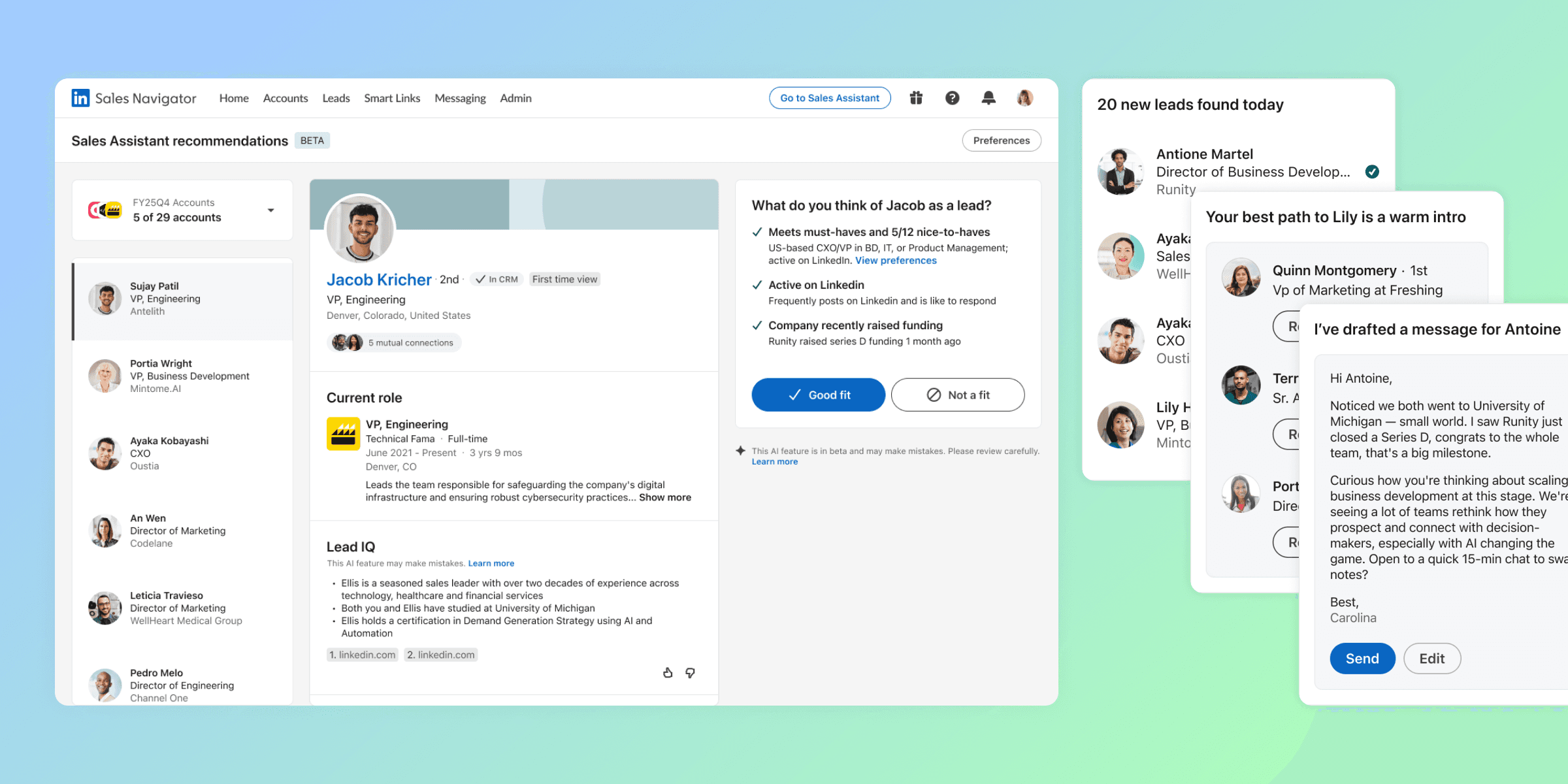
Sales Assistant is LinkedIn's AI agent for B2B sales. Unlike Sales Navigator's filter-based search, it interprets natural language preferences and surfaces leads users wouldn't find on their own. I joined right after the Beta launched with ~200 managed businesses. Three weeks in, metrics were below expectations and still declining.
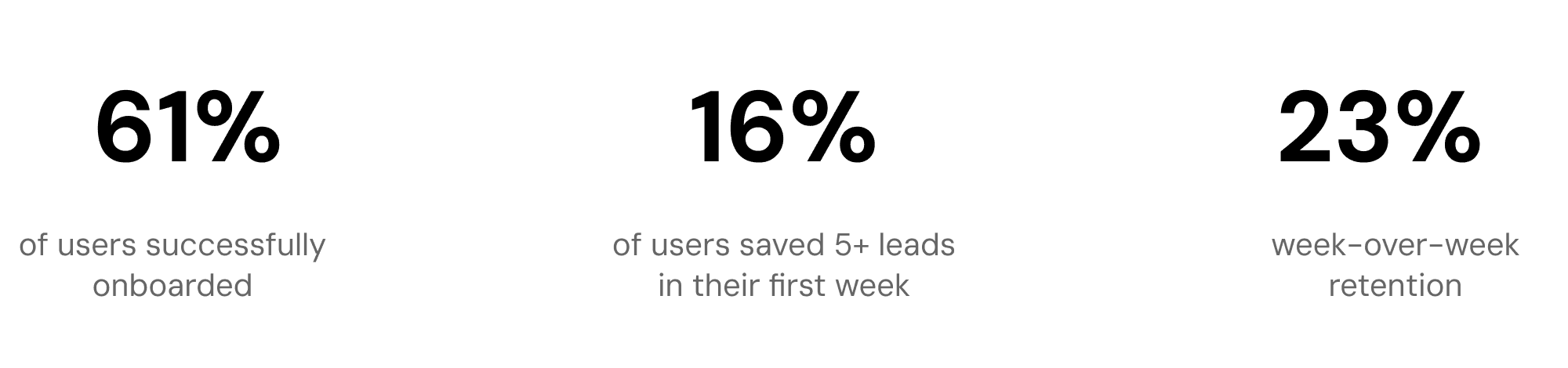
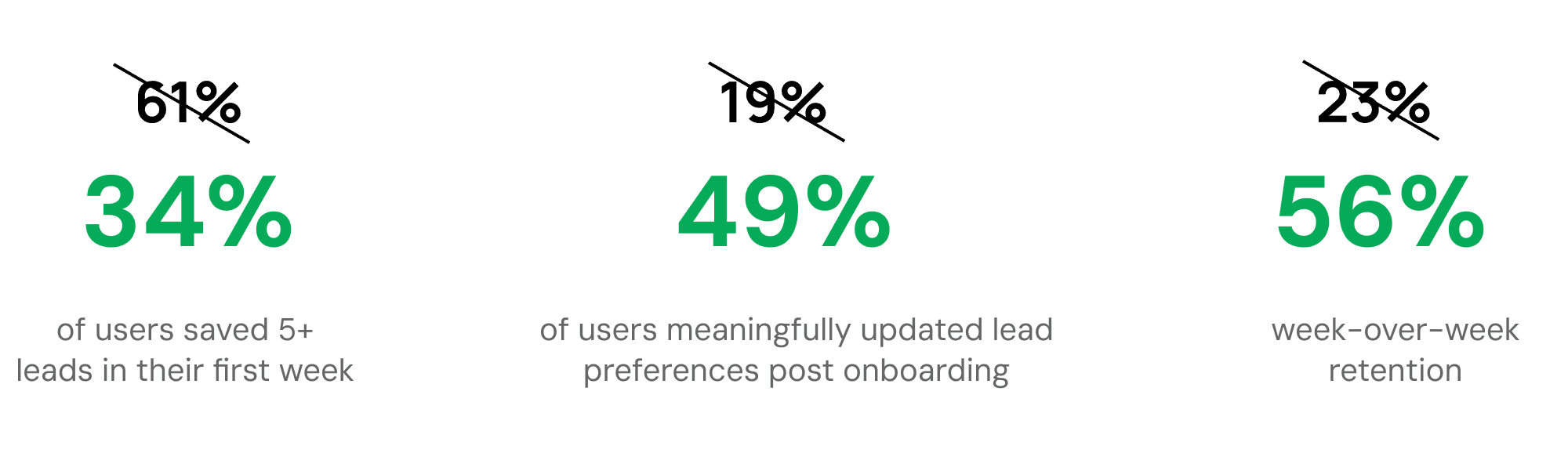
Only 16% of users saved 5+ leads in week one. Only 19% meaningfully updated their lead preferences post-onboarding. Week-over-week retention was 23% and dropping. Digging into usage data with DS and PMM, the drop-offs weren't random -- half of onboarded users never rated a single lead, many abandoned before seeing results because loading took up to five minutes with no progress signal, and those who did engage weren't providing enough signal to improve lead quality.
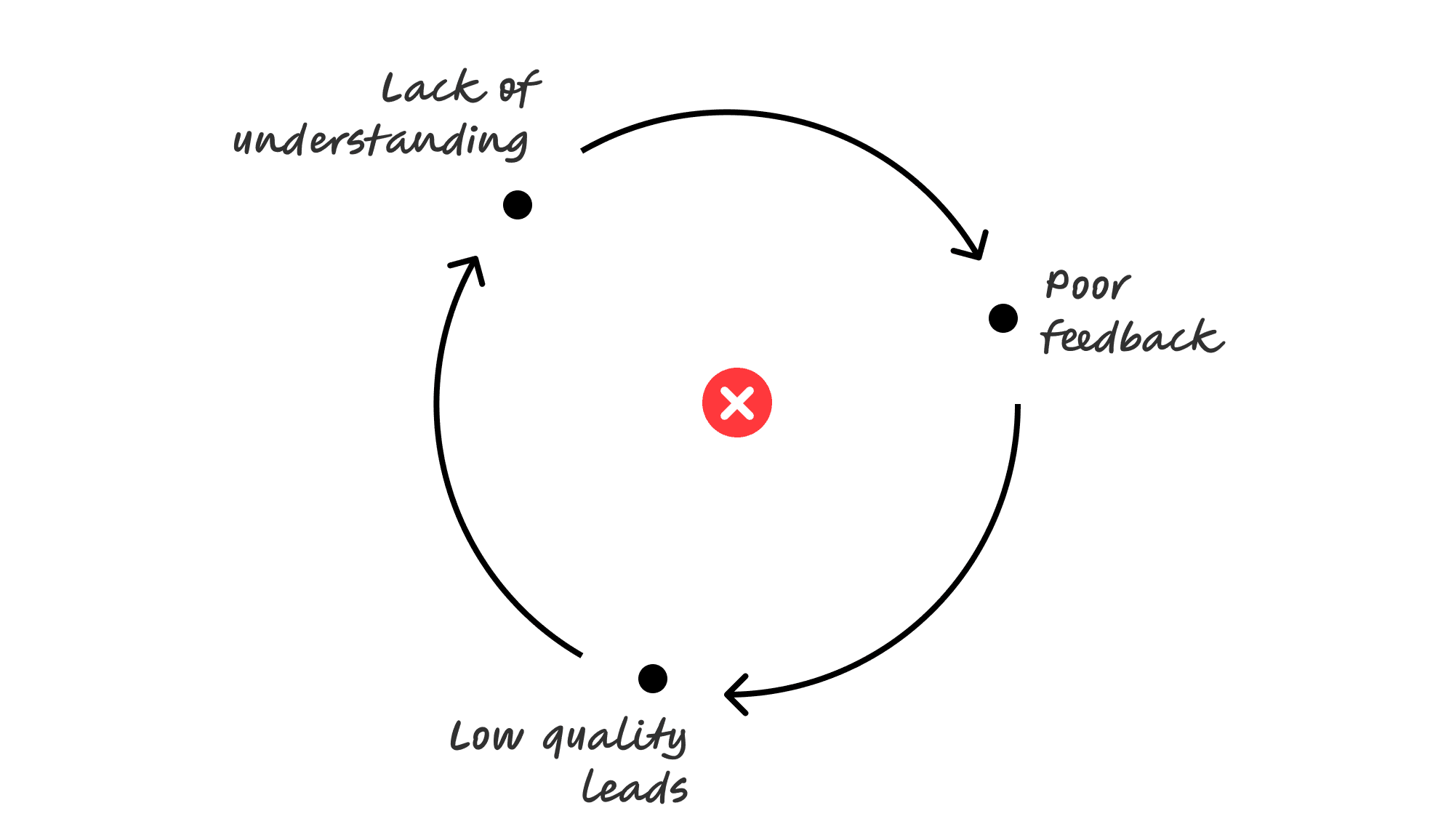
The root cause was a broken feedback loop. Users didn't understand how the agent worked, so they didn't engage. Leads stayed irrelevant. The agent couldn't learn. Engagement dropped further. The cycle compounded before the product ever had a chance.
02
Goal
Goal
Two hypotheses were already in motion when I joined: the backend algorithm was underperforming, and expanding from account-based to lead-based prospecting could unlock 35% of the user base. Both were plausible. Neither addressed the root cause.
How might we design a seller-agent collaboration experience that breaks the negative loop and turns user engagement into a cycle of improving lead quality?
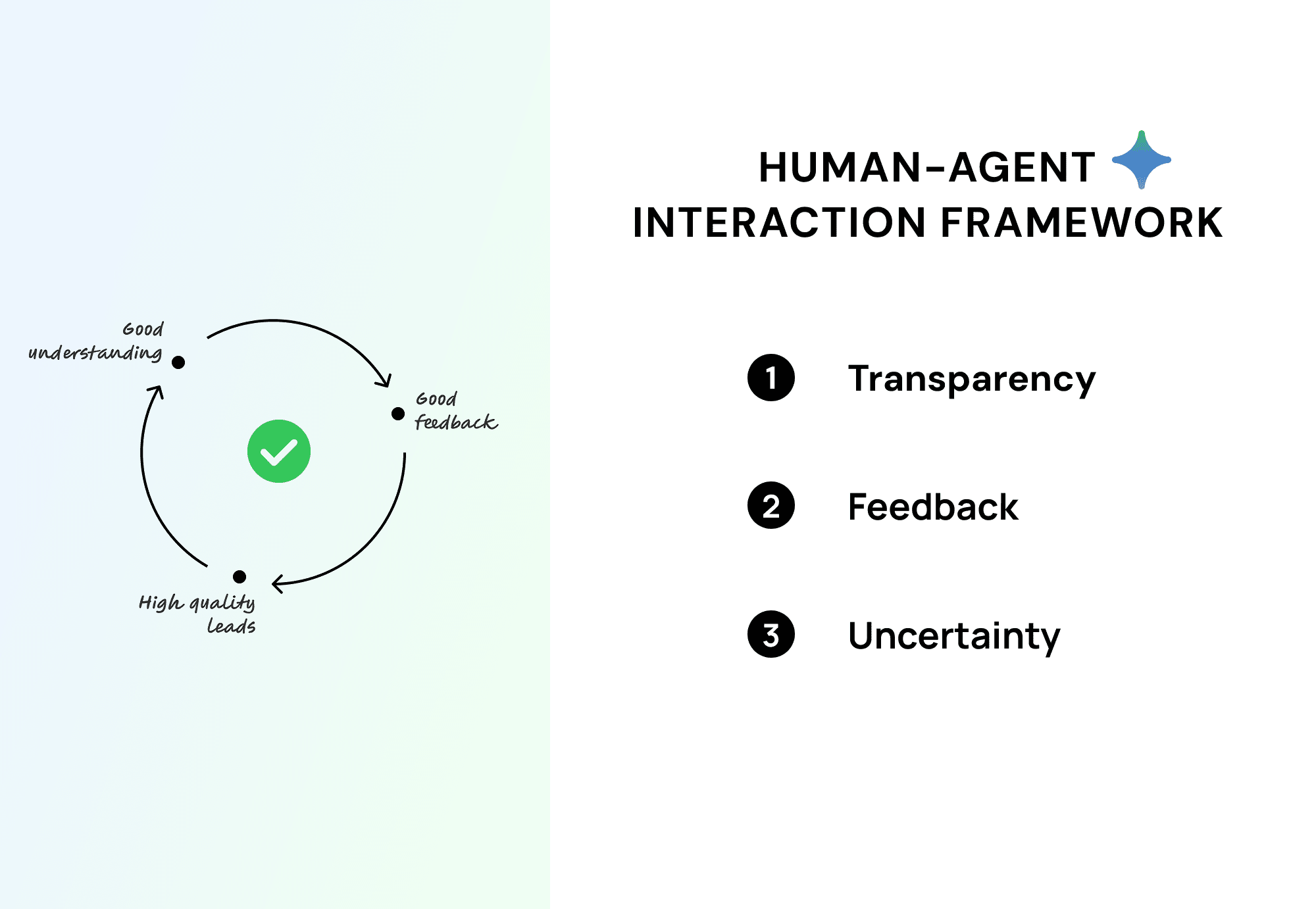
I developed a Human-Agent Interaction Framework to align the team around a shared definition of the problem and drive prioritization across design, PM, and engineering. With limited resources and competing priorities, I structured a one-week sprint to validate direction before asking for broader investment.
01
Transparency
Show AI working progress, not just results. Help users understand what the agent is doing and why, so they can engage with it as a capable system rather than a black box.
02
Feedback
Make it easy and effective to train the agent. Every interaction should close the loop, with visible evidence that the agent understood and acted on user input.
03
Graceful failure
Always give users a path forward. When the system falls short, whether due to low lead liquidity or poor preferences, guide users toward the action that will improve it.
03
Design
Design
Deep dive #1: Make the AI process visible.
The most urgent problem was drop-off during loading. Generic skeleton loaders offered no signal. Users couldn't tell if the AI was working or broken, and 25% abandoned before seeing a single lead.
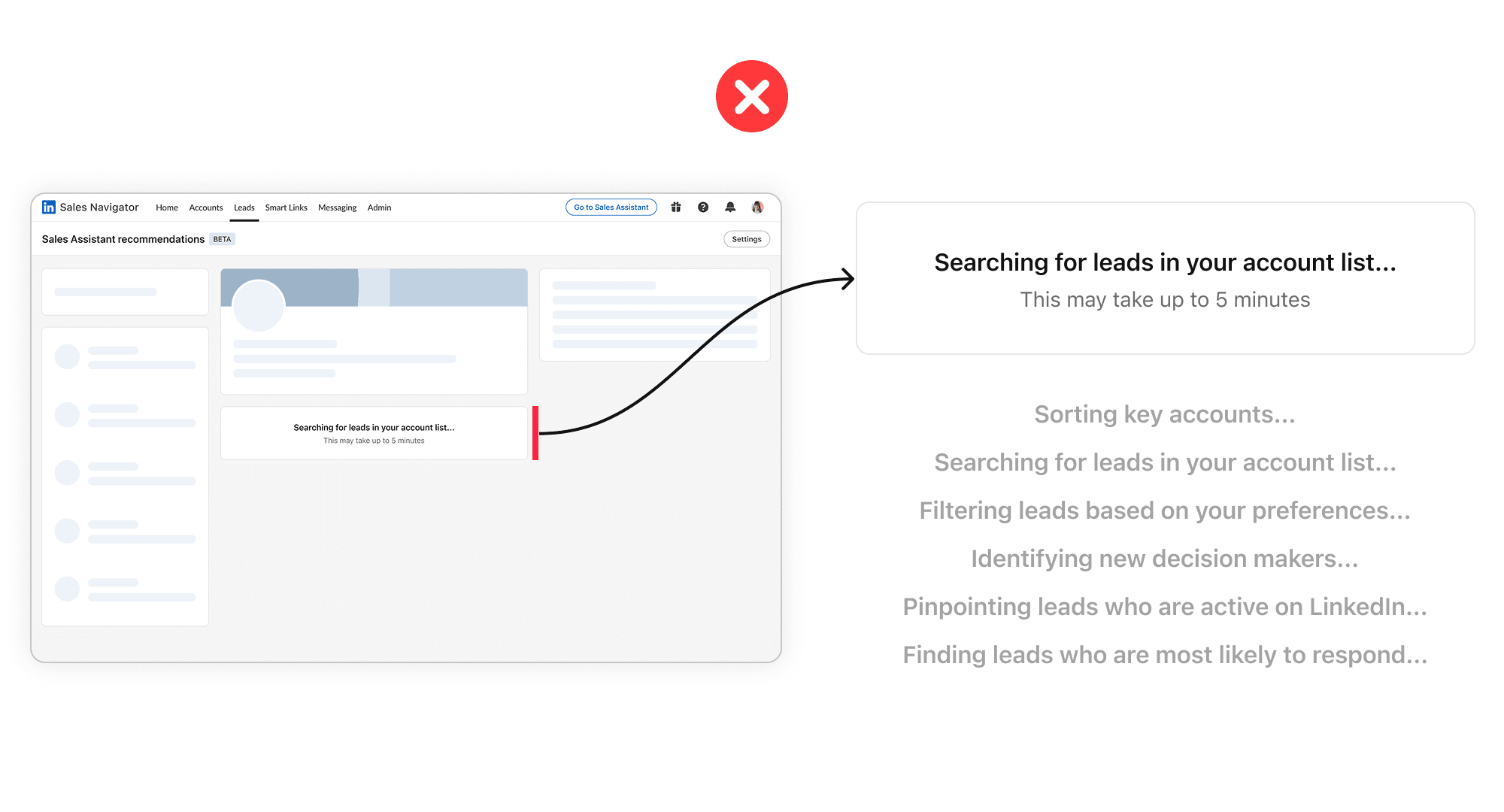
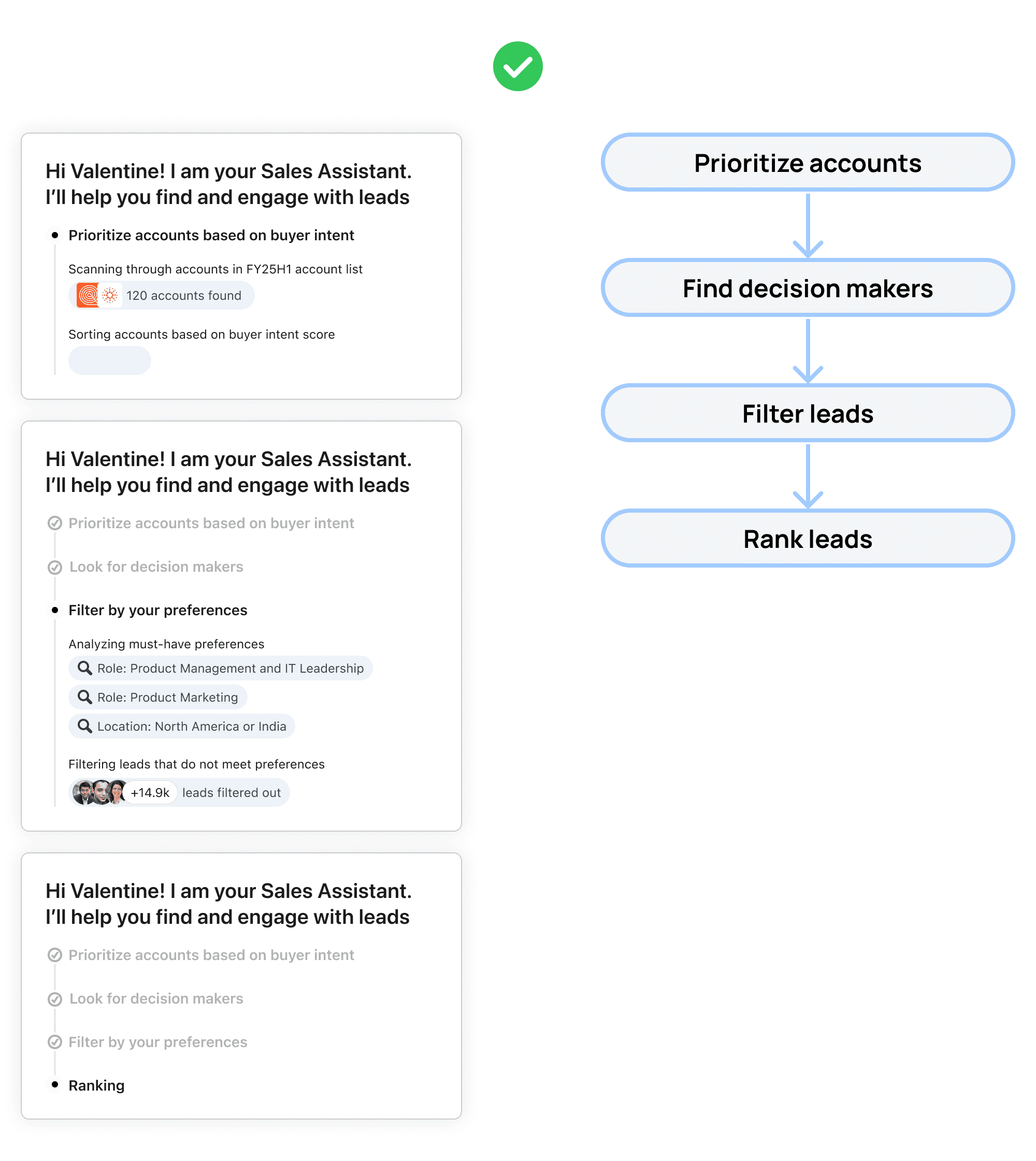
Sales Assistant actually has a real, multi-step process: it prioritizes accounts, finds decision makers, filters leads, and ranks them. Making this process visible transformed the wait from an uncertainty into a demonstration of the agent's intelligence. Each step is named and shown in sequence, following thinking-mode patterns from leading AI tools. Users understand how the system works, not just that it's working.
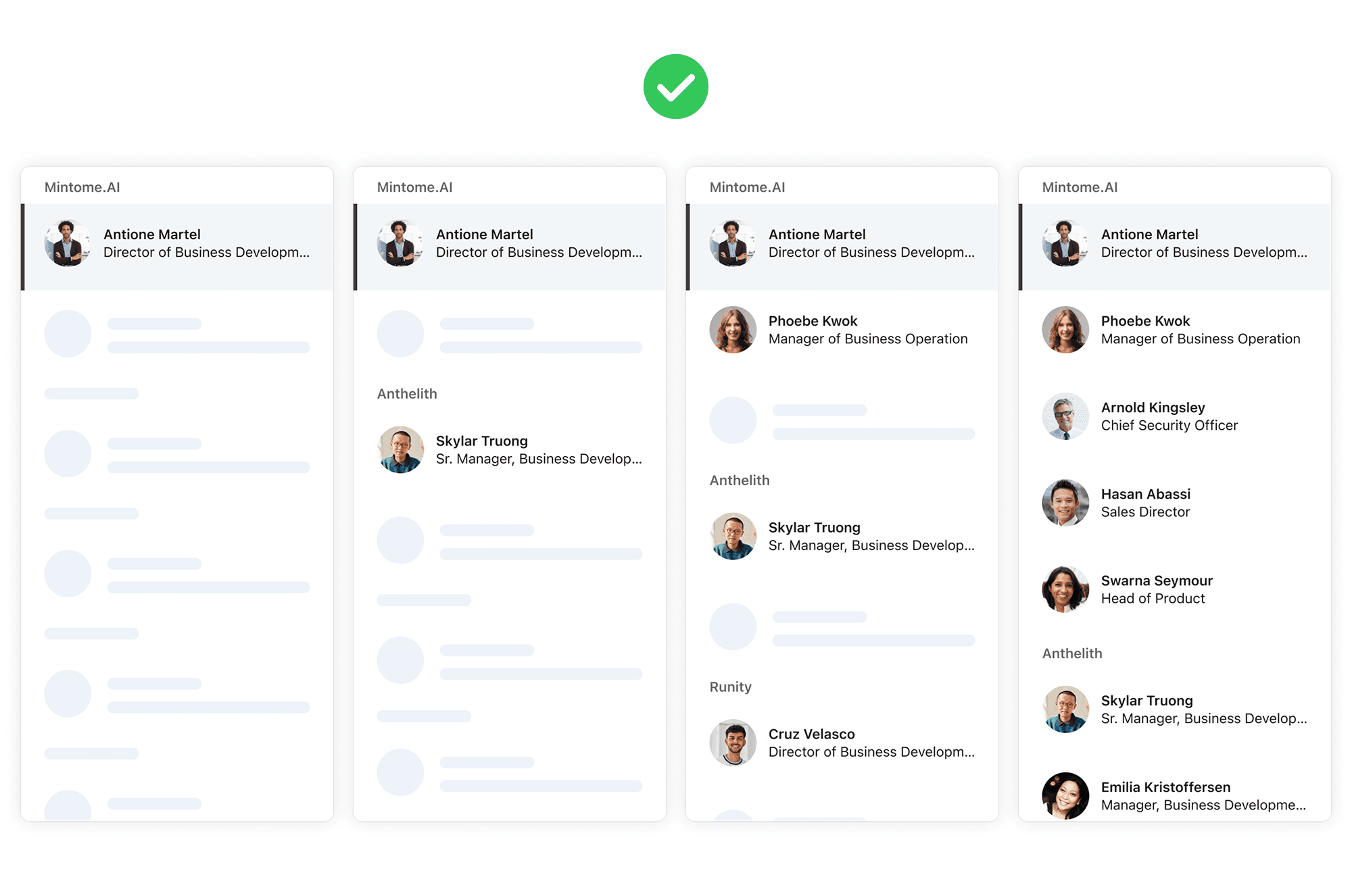
I also introduced two structural changes. First, content and agent load independently. Rather than blocking the entire view while the agent works, leads appear as they arrive. This reduced time to first result from approximately 90 seconds to 57 seconds. Second, loading states were mapped to information hierarchy, not just progress, surfacing AI thinking without blocking primary content.
This was the first experiment we launched. Drop-off before seeing any leads fell from 25% to 8%, and it drove a 9% lift in week-over-week retention. Strong early results earned leadership trust and unlocked additional investment to accelerate the direction.
Deep dive #2: Redesign the lead reasoning card.
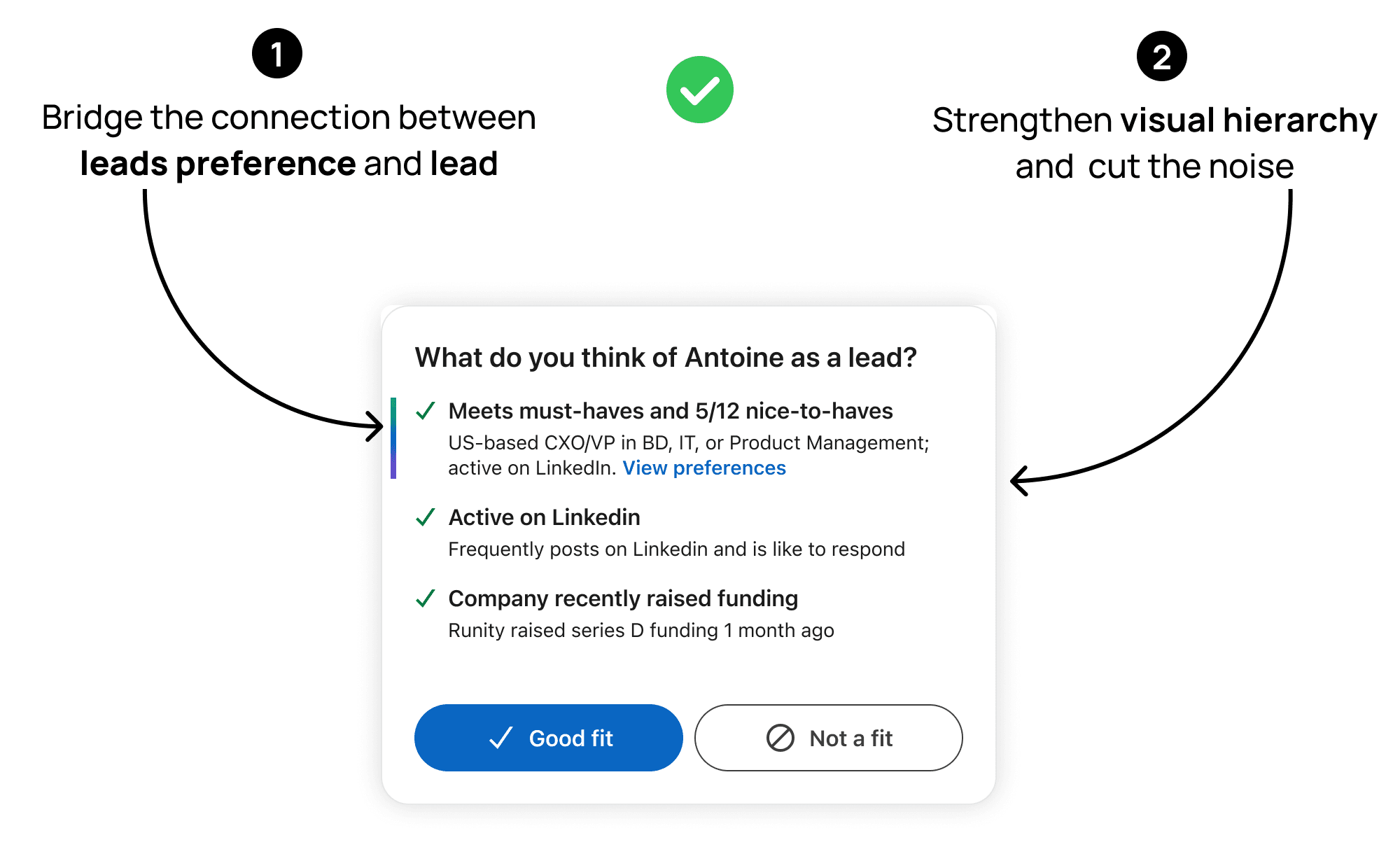
The original lead card presented AI reasoning as dense, unstructured text. An audit of real examples confirmed the problem was even worse at scale. Paragraphs of similar-looking bullet points made it nearly impossible to quickly understand why a specific lead was chosen.
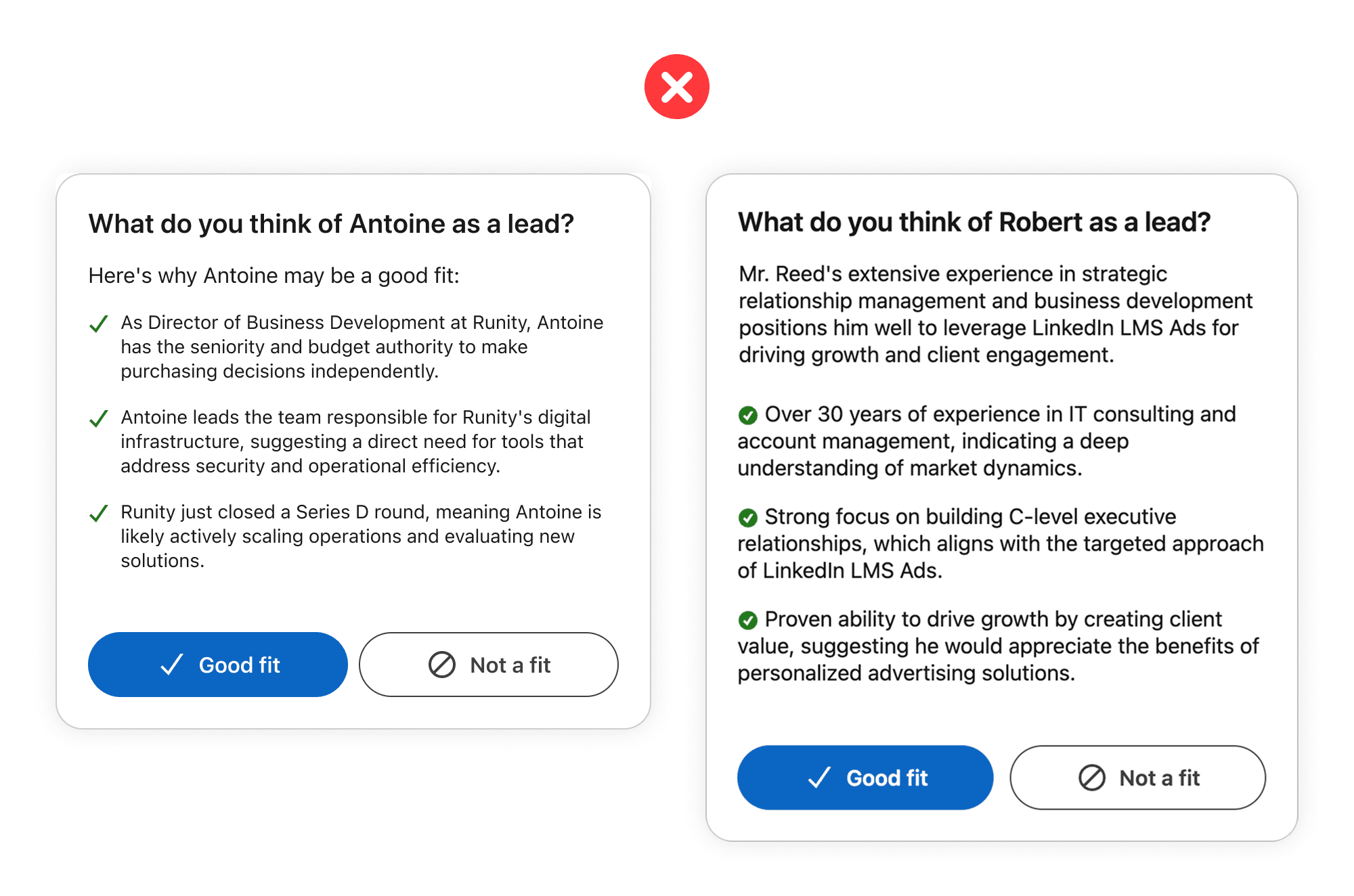
The redesigned card bridges the connection between the user's own lead preferences and each individual lead. The first item now maps directly to the user's must-haves, making the reasoning immediately legible. Paired with stronger visual hierarchy and reduced information density, the card became a moment of clarity rather than cognitive load. This drove a 7% lift in users saving 5 or more leads in their first session.
Deep dive #3: Make feedback trigger visible action.
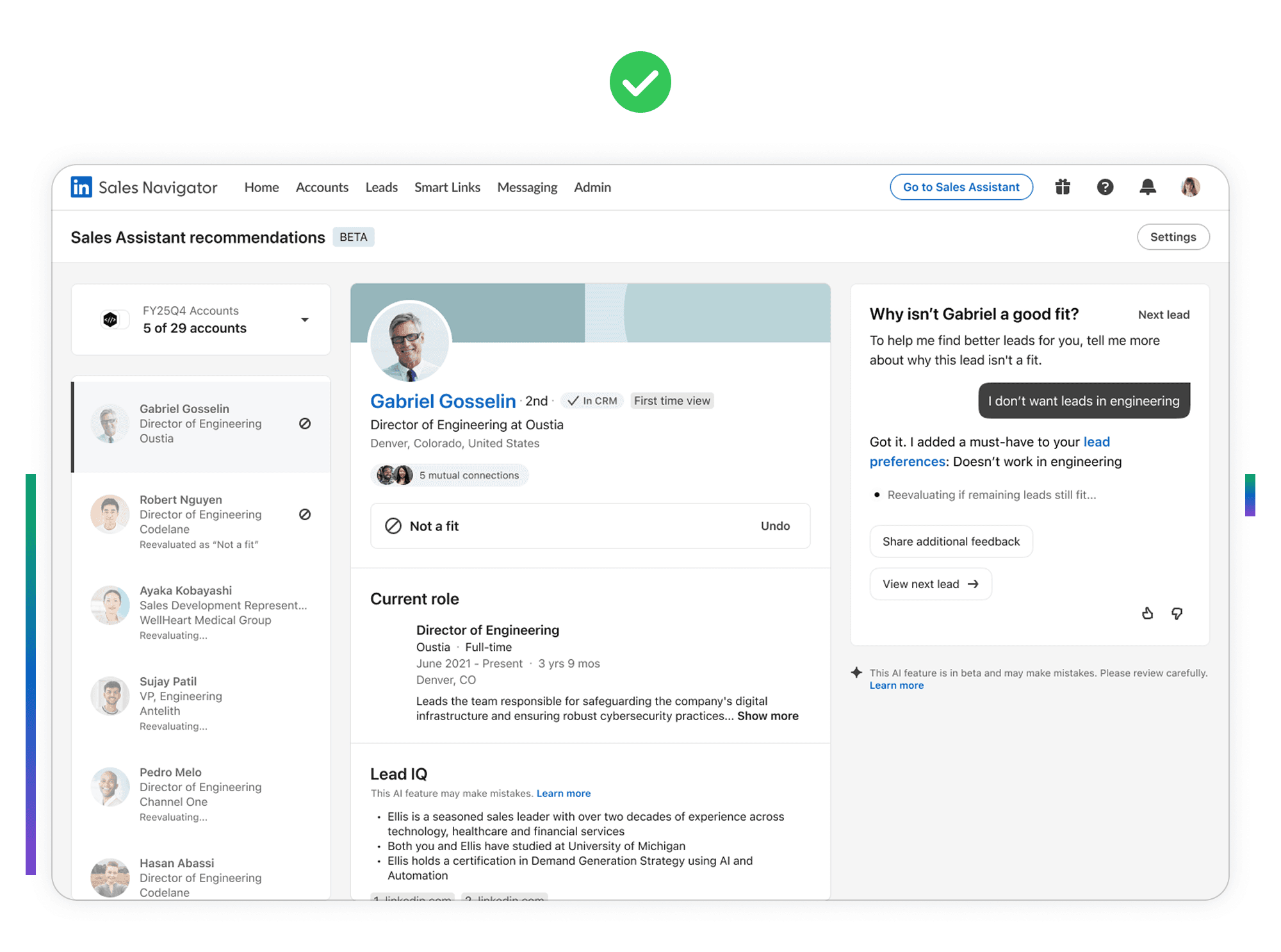
Even when users rated a lead, the original experience gave no confirmation the agent had heard them. Feedback was recorded but not acted on in the moment. The redesign makes it feel consequential: rating a lead as Not a Fit immediately surfaces a follow-up asking why, with quick-select reasons and a natural language input. The agent re-evaluates remaining leads in real time, with clear visual cues confirming it understood and is actively working. The loop between human input and agent behavior is now visible and immediate.
Deep dive #4: Breaking the loop with calibration.
Users who rated fewer than 5 good fits were 3 times more likely to churn, trapped in a loop they couldn't escape. Poor preferences led to low-quality leads, which led to less feedback, which made preferences harder to improve.
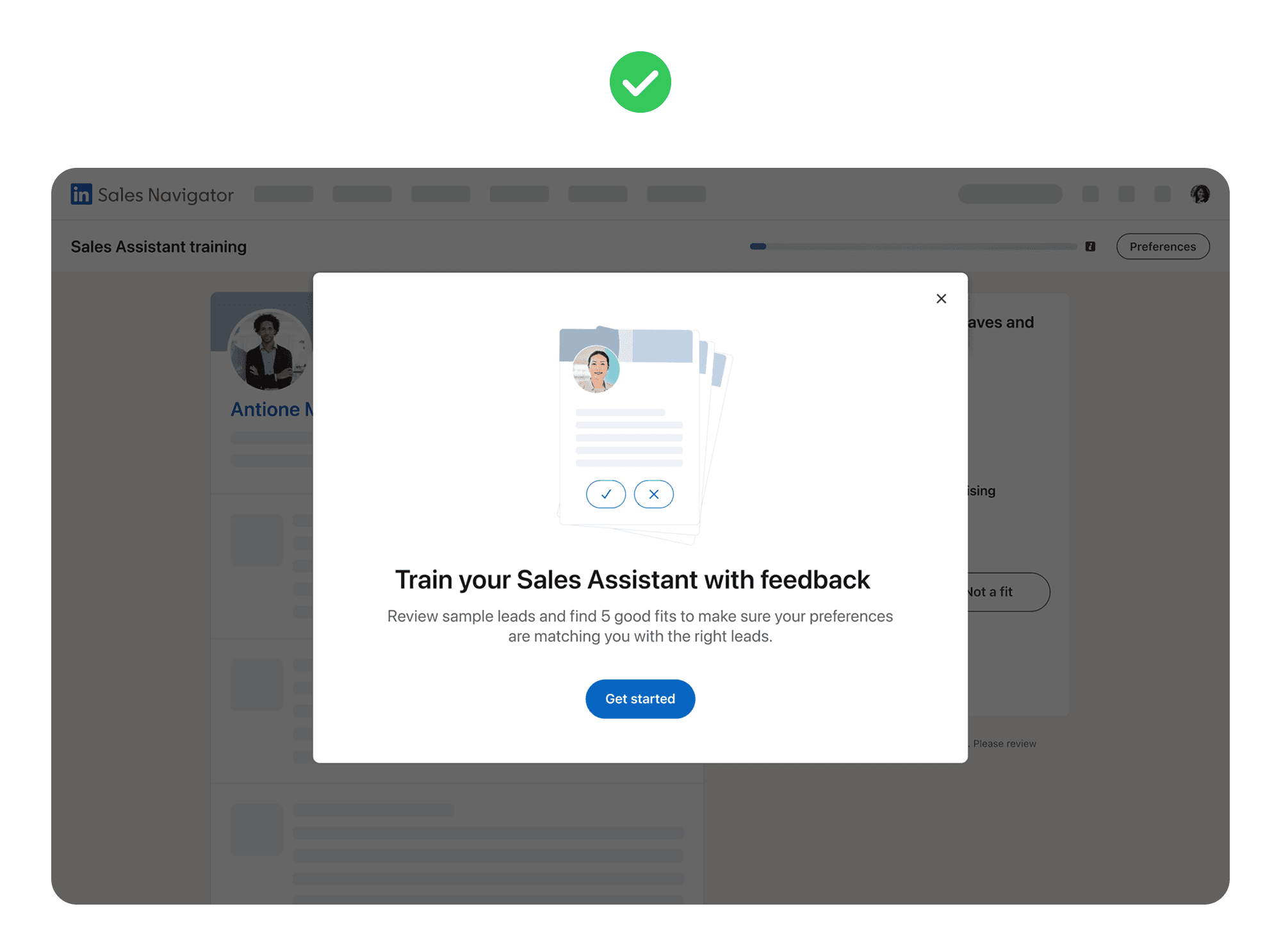
When lead quality is low or estimated to be low, a calibration stage captures user intent upfront. Users are prompted to review sample leads and identify at least 5 good fits before the full recommendations run. Training the agent early improves lead quality from the start, before the negative loop can form.
Deep dive #5: Graceful failure at every stage.
No matter how well the system performs on average, edge cases are inevitable. The goal was to ensure every failure mode had a designed path forward rather than a dead end.
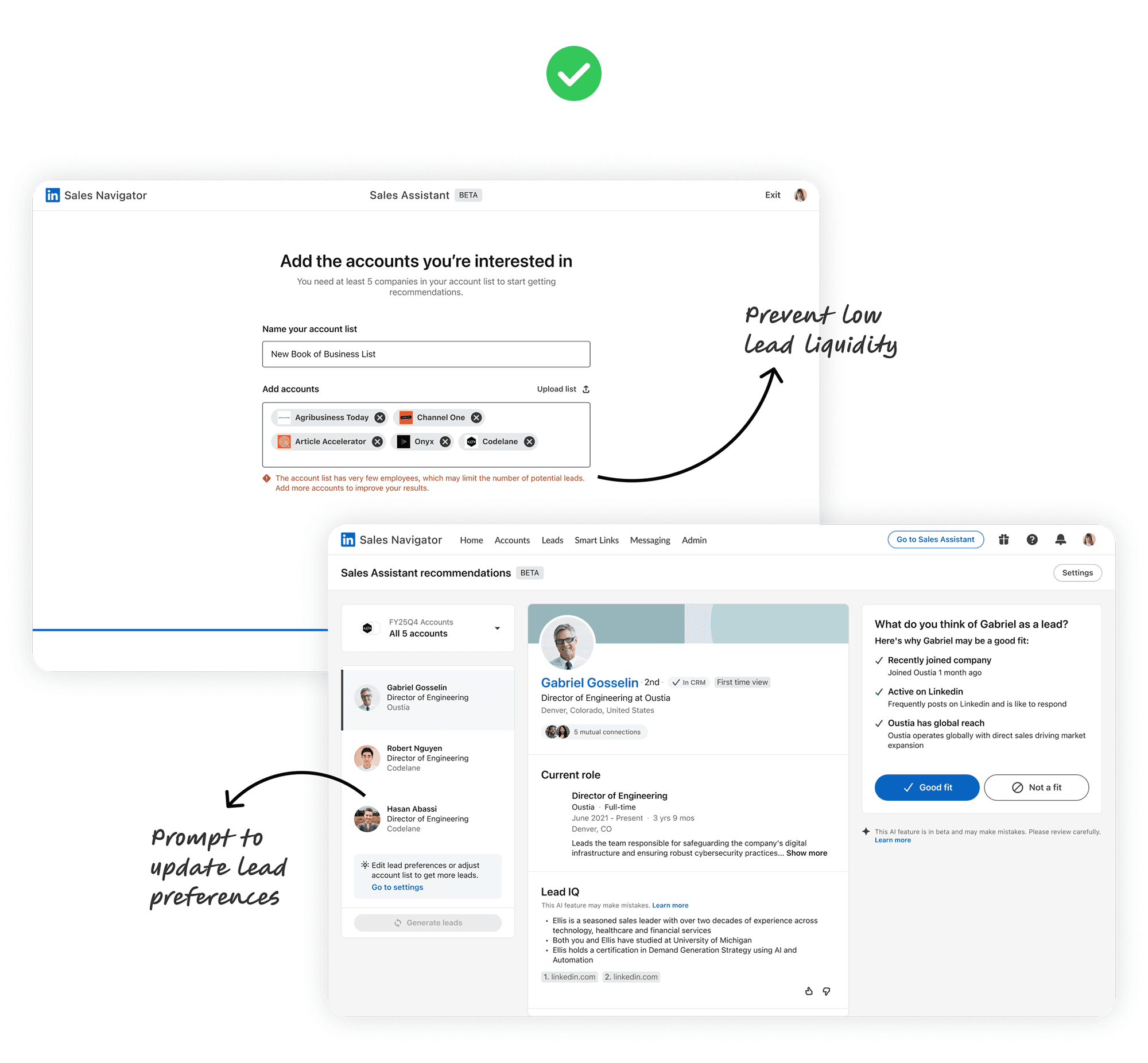
Preventing and handling low lead liquidity.
From approximately 200 Beta users, 8% of sessions returned zero leads and 21.5% returned fewer than five. The original response was a generic "Something went wrong" error with a Reload button and no guidance on what to do next.
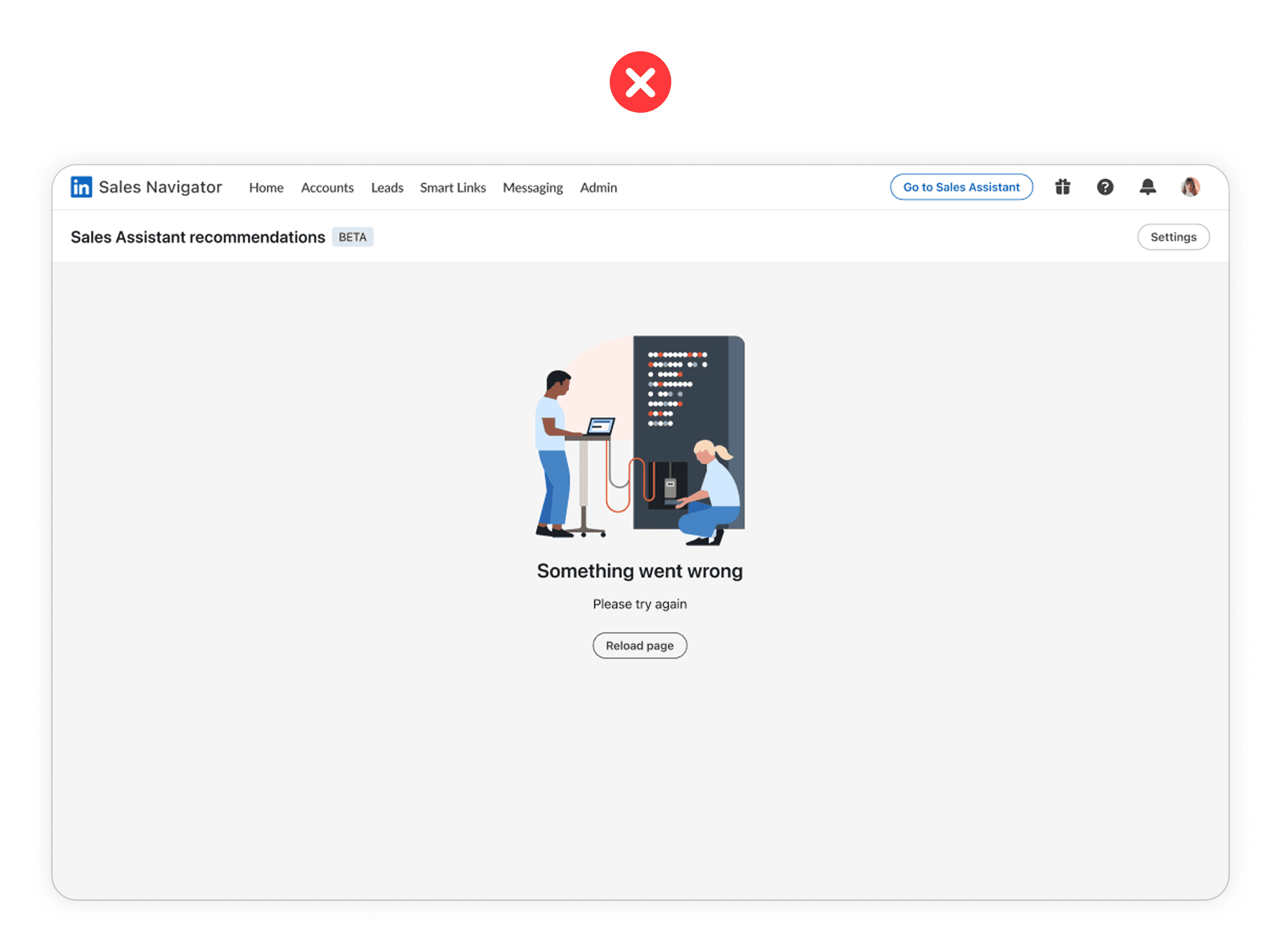
The redesigned experience prevents the problem upstream by warning users during account list setup when the input pool is too small to generate quality recommendations. When low liquidity does occur in-session, users see a clear next step: edit lead preferences or add more accounts, with direct links to take action rather than a dead end.
04
Result
Result
Result #1: All key metrics improved significantly at public launch.
The Beta had set a low baseline. After the redesign and public launch, all three core metrics moved significantly.
Result #2: A shared framework drove team alignment and prioritization.
Before the framework, the team was operating on competing hypotheses with no shared way to evaluate tradeoffs. By developing the Human-Agent Interaction Framework together with DS, PMM, and UXR, we gave the team a principled lens for prioritization rather than a backlog of disconnected ideas. The framework structured not just the design work, but how we sequenced experiments and communicated progress to leadership.
Result #3: Early results secured investment to accelerate the next phase.
With limited resources, the strategy was to validate the framework through a focused experiment before asking for more. The loading redesign delivered quickly, a 17-point drop in early drop-off and a 9-point lift in weekly retention, earning leadership trust and unlocking additional resources to double down on the collaboration direction.
05
Next
Next
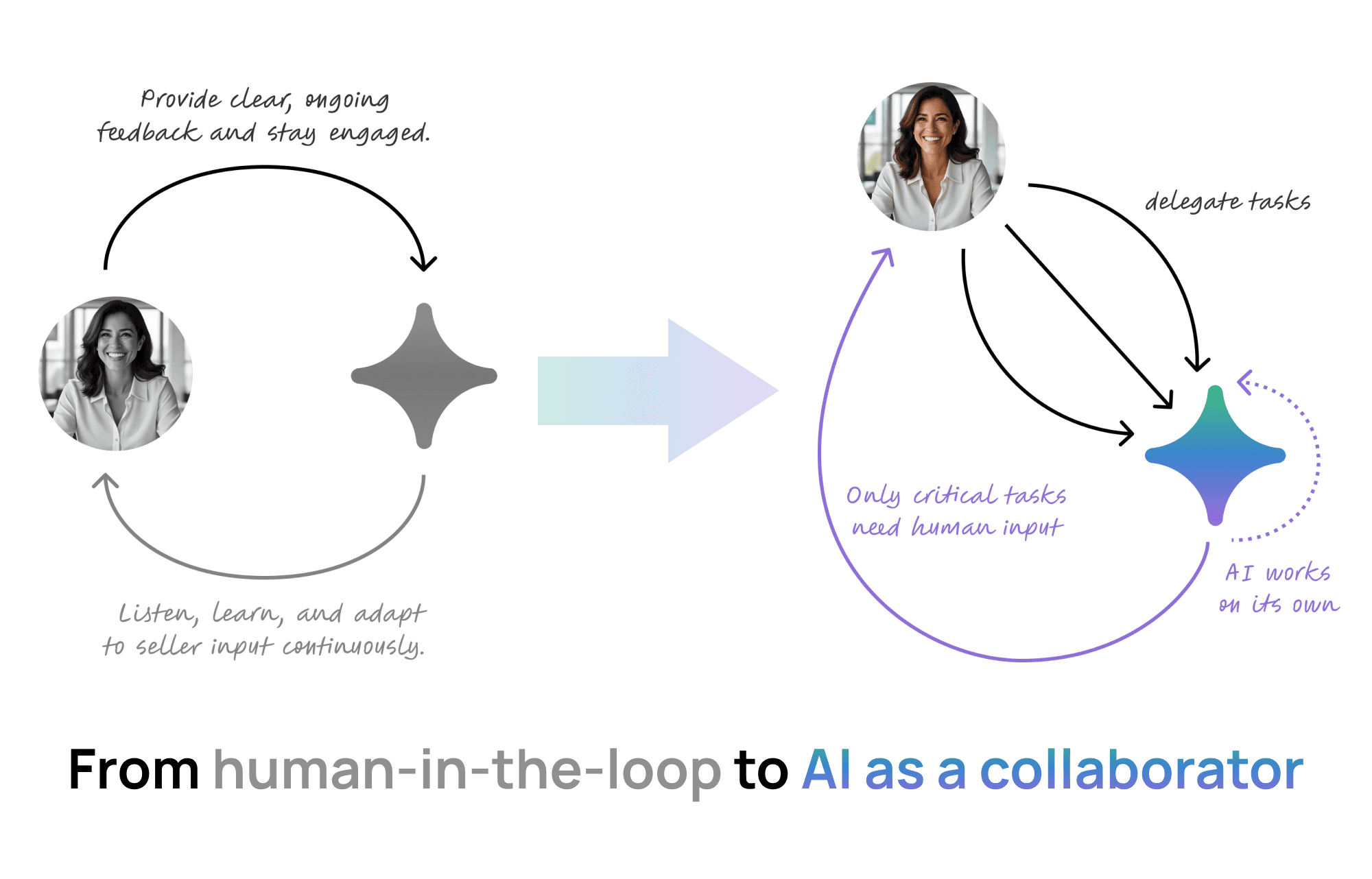
The results above represent a real turnaround, but this isn't the end. With the feedback loop established, the next step is shifting the burden from human to agent -- moving from human-in-the-loop to AI as a true collaborator, where users only step in for decisions that genuinely need them.
This work is ongoing. Curious to learn more? Reach out.