Meta Verified Subscription for Businesses
Built Meta Verified for Businesses 0→1, scaling from 500 to 1M subscribers across Facebook, Instagram, and WhatsApp.
- Company
- Meta
- Year
- 2023–2024
- Role
- Design Lead, team of 6 across Facebook, Instagram, and WhatsApp, aligning senior leadership and driving design execution.
01
Problem
Problem
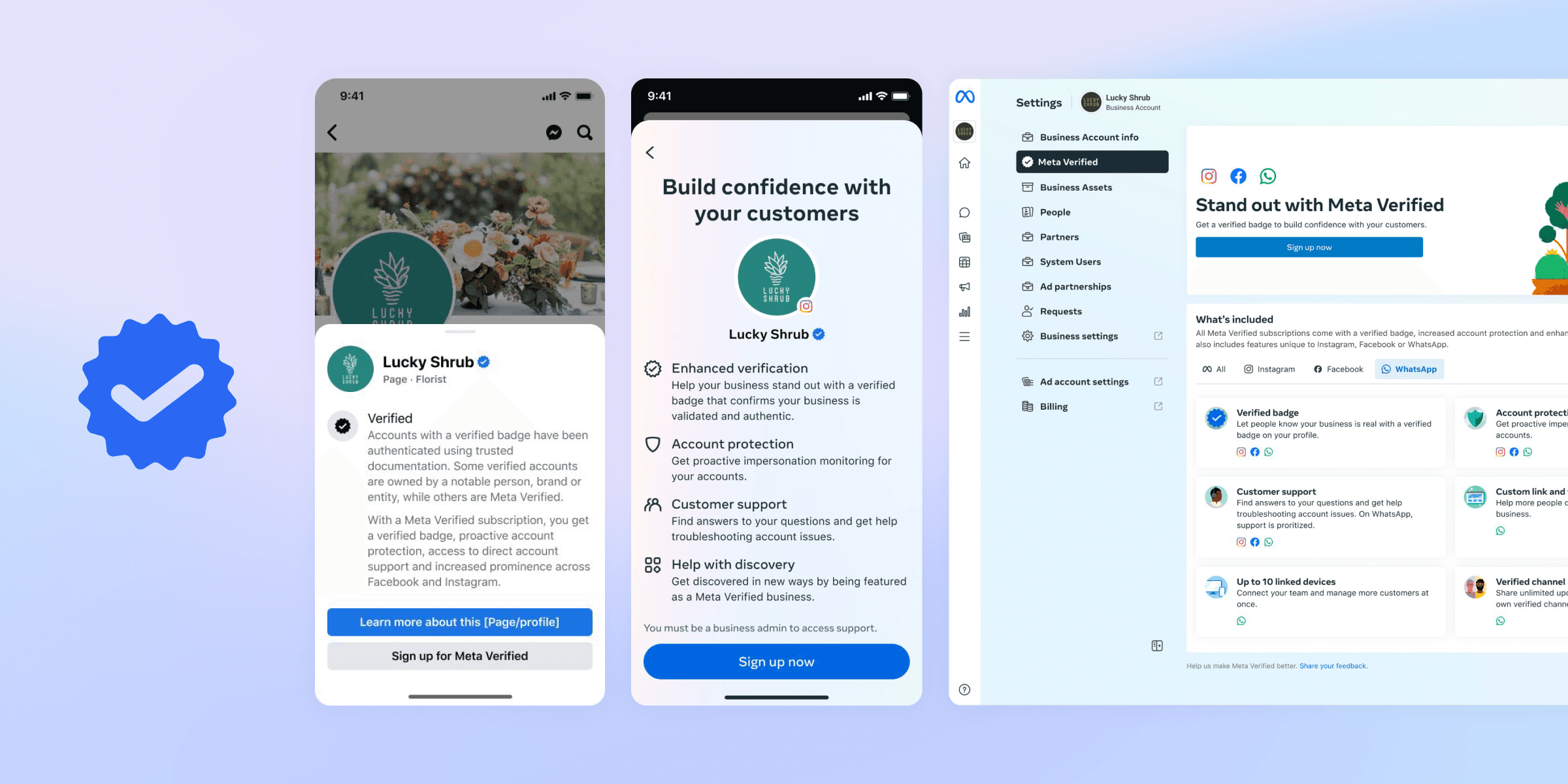
Meta Verified is Meta's first-ever subscription product, providing users with a blue verification badge along with exclusive benefits such as dedicated customer support and impersonation protection.
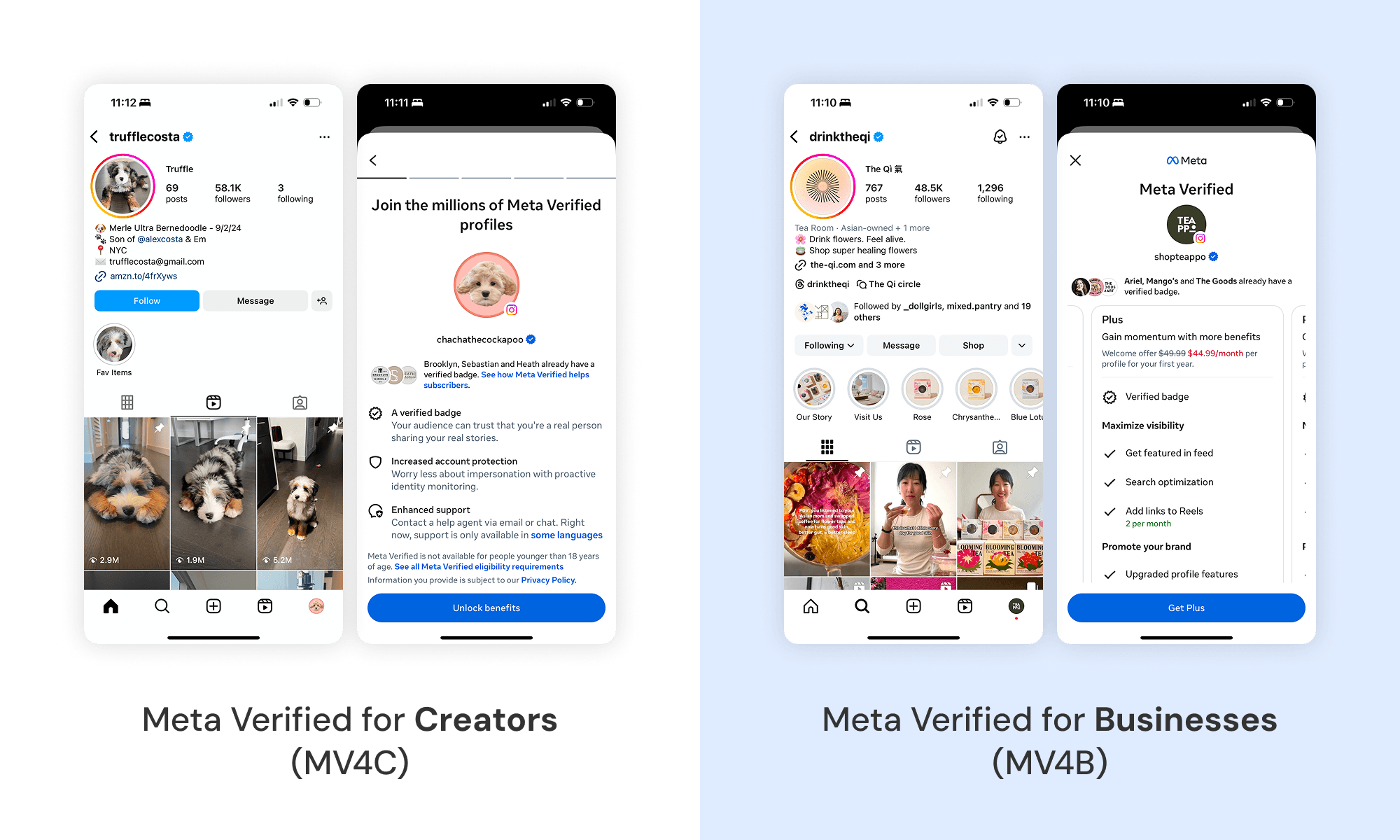
Initially launched for creators, Meta Verified quickly demonstrated potential for broader adoption. With businesses representing over 90% of Meta's revenue opportunity, expanding the subscription to businesses became a strategic priority — especially following GDPR's impact on ad revenue, making diversification of income streams mission-critical.
In March 2023, I was asked to lead a cross-org design sprint to explore how Meta Verified could be extended from creators to businesses. This involved identifying key challenges, defining the product vision, and aligning cross-functional teams to drive execution.
02
Goal
Goal
Given the aggressive timeline set by Mark Zuckerberg and senior leadership, we adopted a two-phase approach to expand and scale Meta Verified for Business.
Phase #1: MVP launch
How might we expand Meta Verified from creators to businesses with minimal changes?
To achieve this, we needed to:
- Identify the differences between creators and businesses, including onboarding experience, product features, and perceived value.
- Make data-driven product decisions by exploring potential variations, using qualitative and quantitative insights to assess whether changes are necessary, considering the cost-benefit tradeoff.
Phase #2: Growth phase
How might we refine and scale Meta Verified for Business to drive sustained growth and maximize value for business users?
To achieve this, we need to:
- Understanding users and finding product-market fit: Gather insights to ensure the offering meets business needs and resonates with the target audience.
- Optimizing user experience: Address friction points in both the onboarding experience and core product to improve conversion rates and long-term engagement.
03
Design
Design
Phase #1: Maximize time to impact and deliver MVP with essential changes.
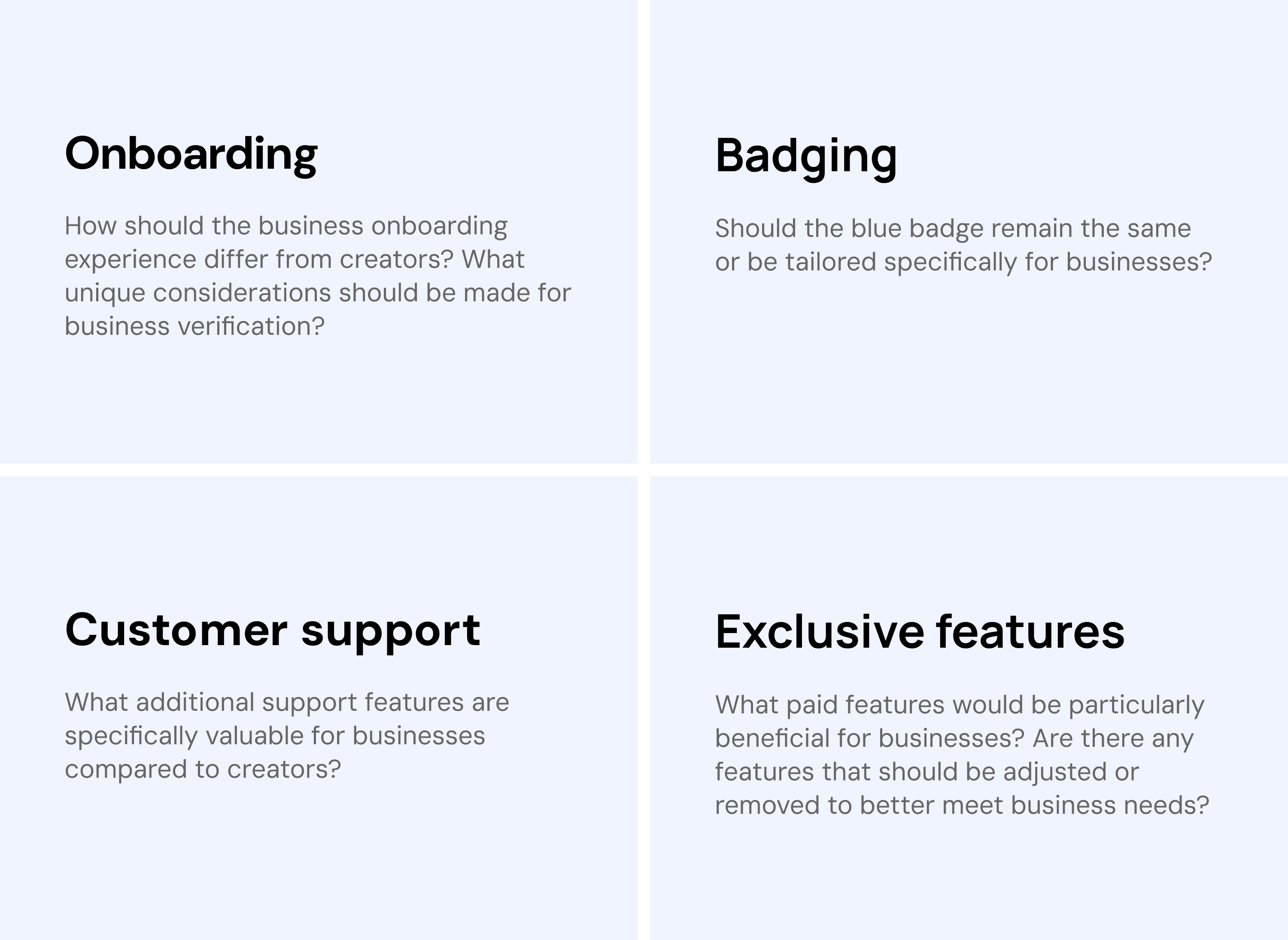
We explored four key areas: onboarding, badging, customer support, and exclusive features, and made targeted decisions in each.
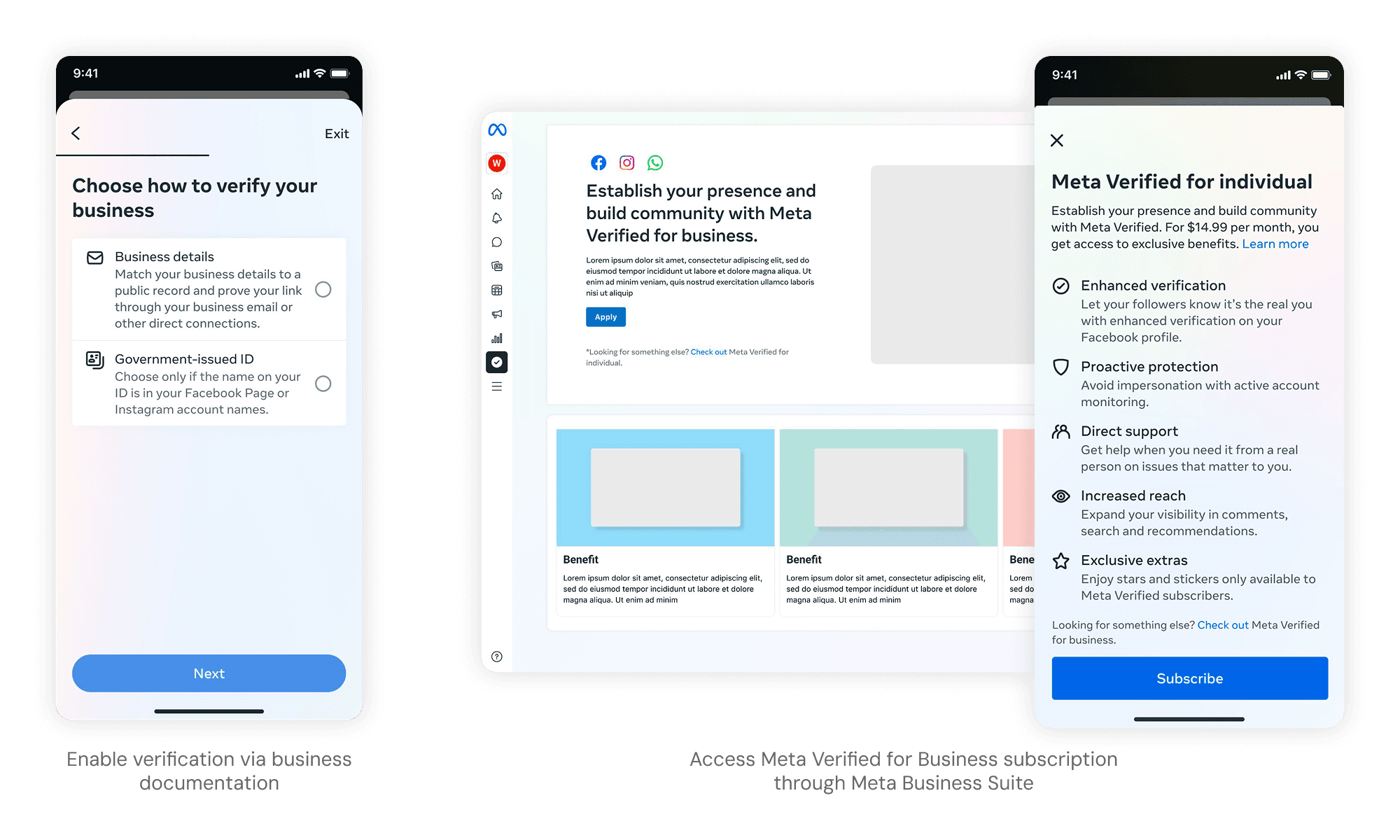
Deep dive #1: Streamlined business onboarding with documentation-based verification and dedicated entry points.
Through research and design exploration, we found that business onboarding can largely mirror the creator flow, with two key adjustments:
- Supporting business documentation: Businesses need to verify their identity through official documentation for legal compliance, rather than government-issued ID.
- Adding dedicated entry points: Introducing entry points on business-focused surfaces like Meta Business Suite makes the process more intuitive by meeting users where they are.
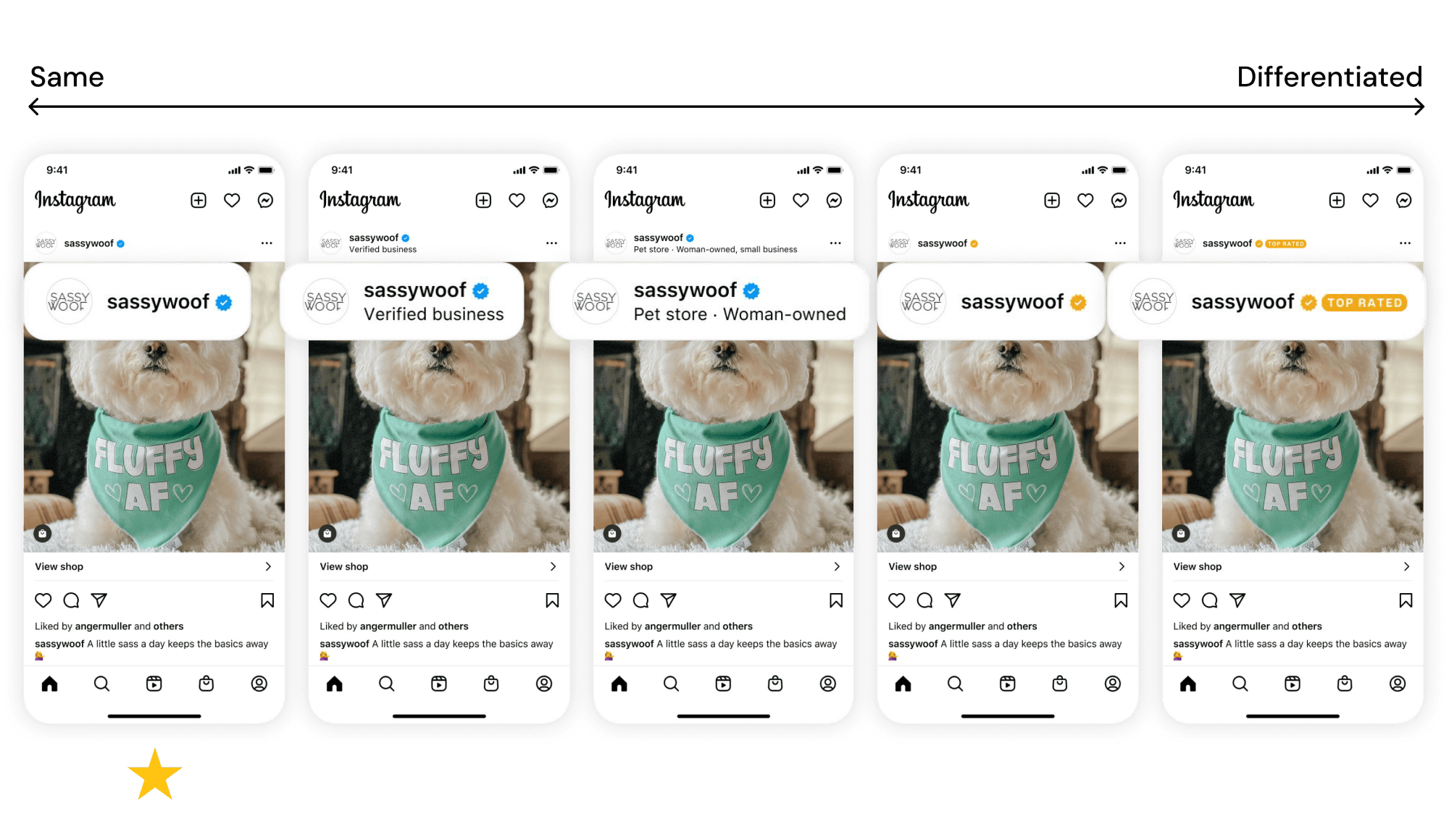
Deep dive #2: Keep the same blue badge for businesses.
We explored a spectrum of badging options from identical to fully differentiated. After gathering insights from UXR and inbound research, and weighing the pros and cons of adding a new design element that could complicate the system, we concluded that using the same badge as creators was the best approach.
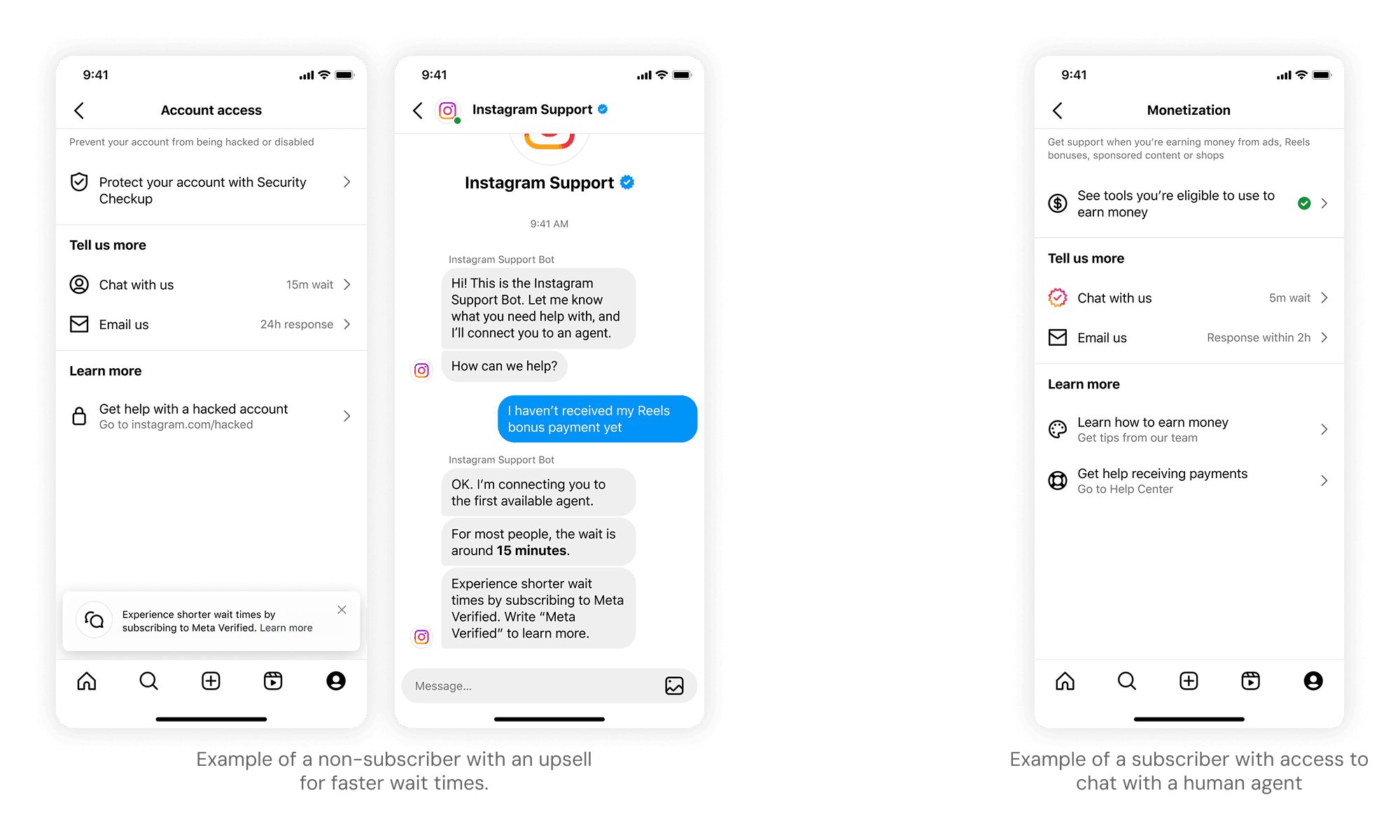
Deep dive #3: Provide prioritized support and access to human agents.
After extensive exploration and UXR testing, we identified two features that businesses highly value and are willing to pay for:
- Priority queue: Faster support response
- Access to live chat: Direct support from human agents
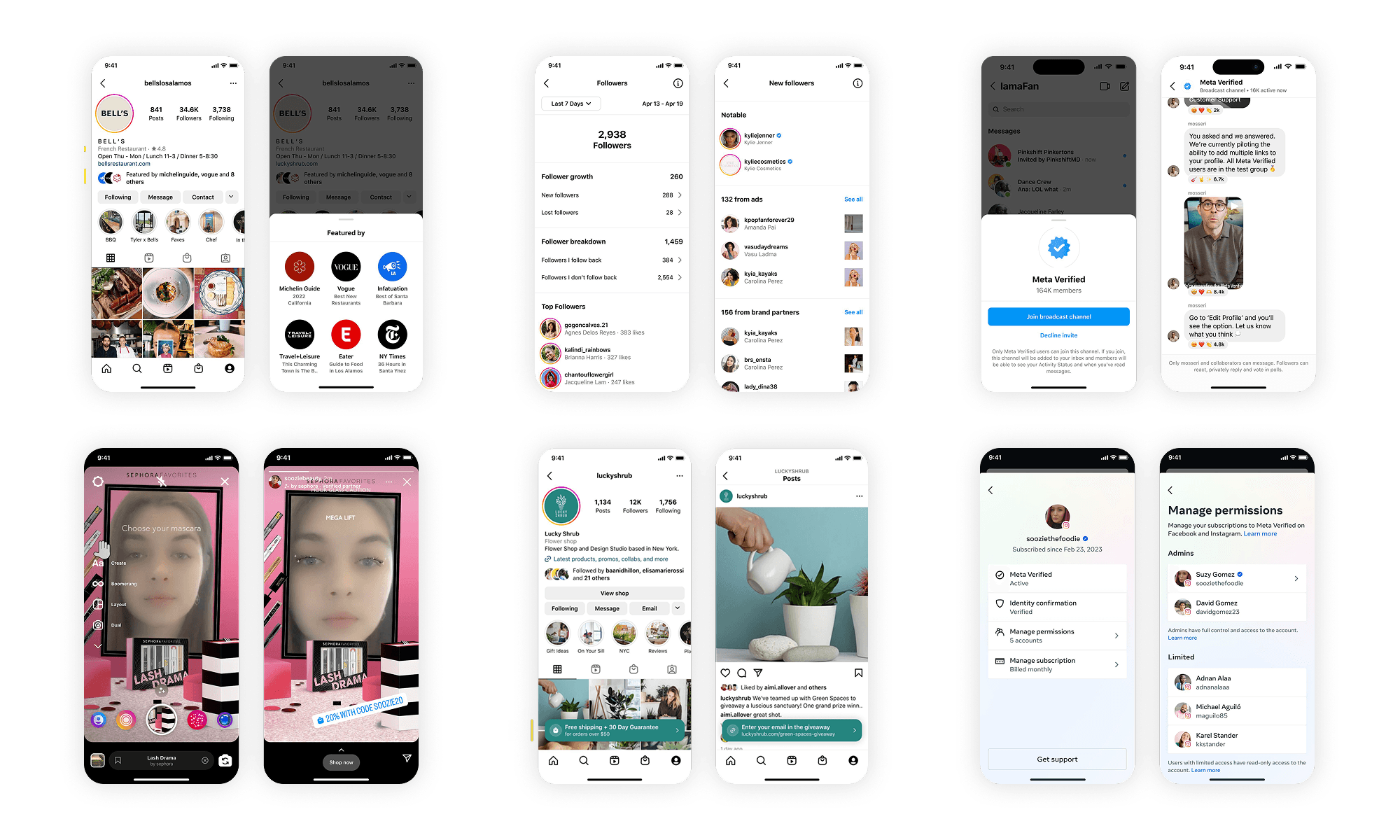
Deep dive #4: No new features for business subscription, for now.
After exploring a wide range of promising options, we decided not to introduce new features at this stage. Without additional user insights and data, it was challenging to align with leadership and the Instagram, Facebook, and WhatsApp teams to build new features.
Phase #2: Refine and scale using a funnel-based approach.
In this phase, we focused on understanding user needs and refining the product to align better with business users. We conducted extensive user research and data analysis to identify gaps in our offerings and optimize the experience, focusing on:
- Exploring opportunities to increase visibility and attract business users.
- Analyzing drop-off points in the onboarding flow to improve conversion rates.
- Identifying feature and experience gaps that would enhance perceived value.
- Running experiments on product pricing models and structures to identify the best fit.
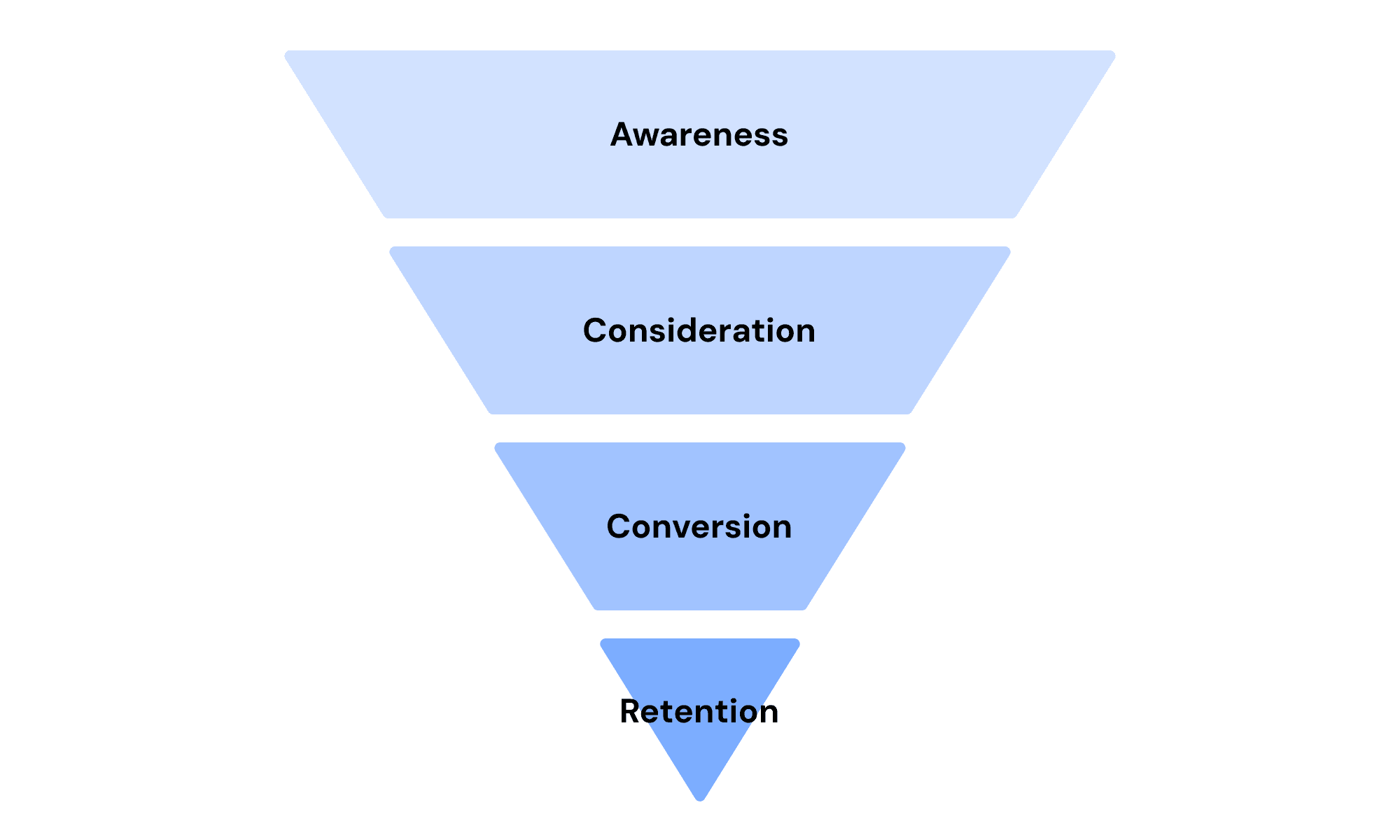
By taking a funnel-based approach, we systematically iterated on the product to increase engagement and drive active subscriber growth.
Deep dive #5: Boosting discovery to drive awareness.
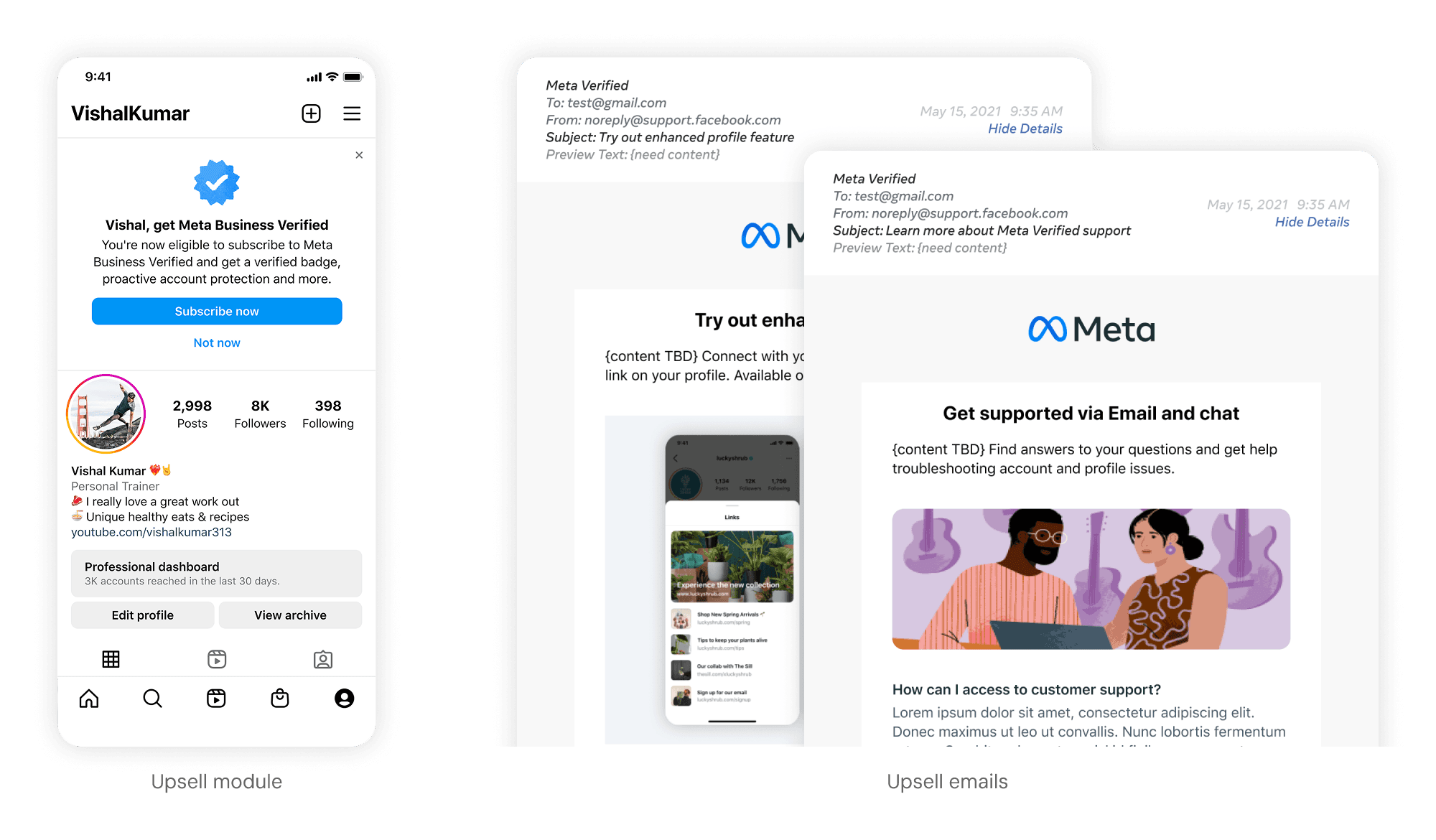
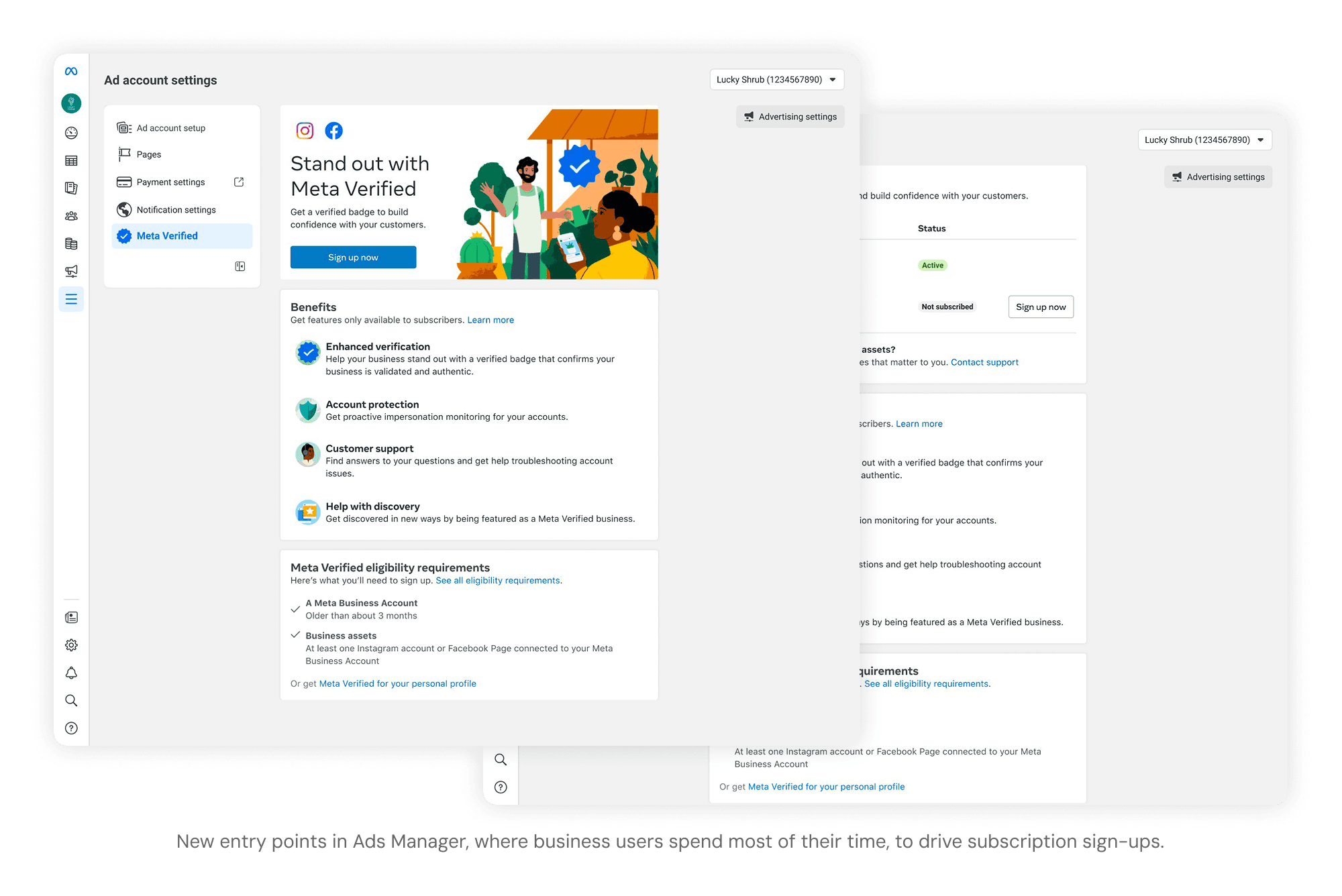
The key issue we identified was that businesses couldn't find Meta Verified. To address this, we:
- Launched upsell modules and targeted emails for high-potential businesses.
- Added permanent entry points on key business surfaces across the Meta ecosystem, including Ads Manager where business users spend most of their time.
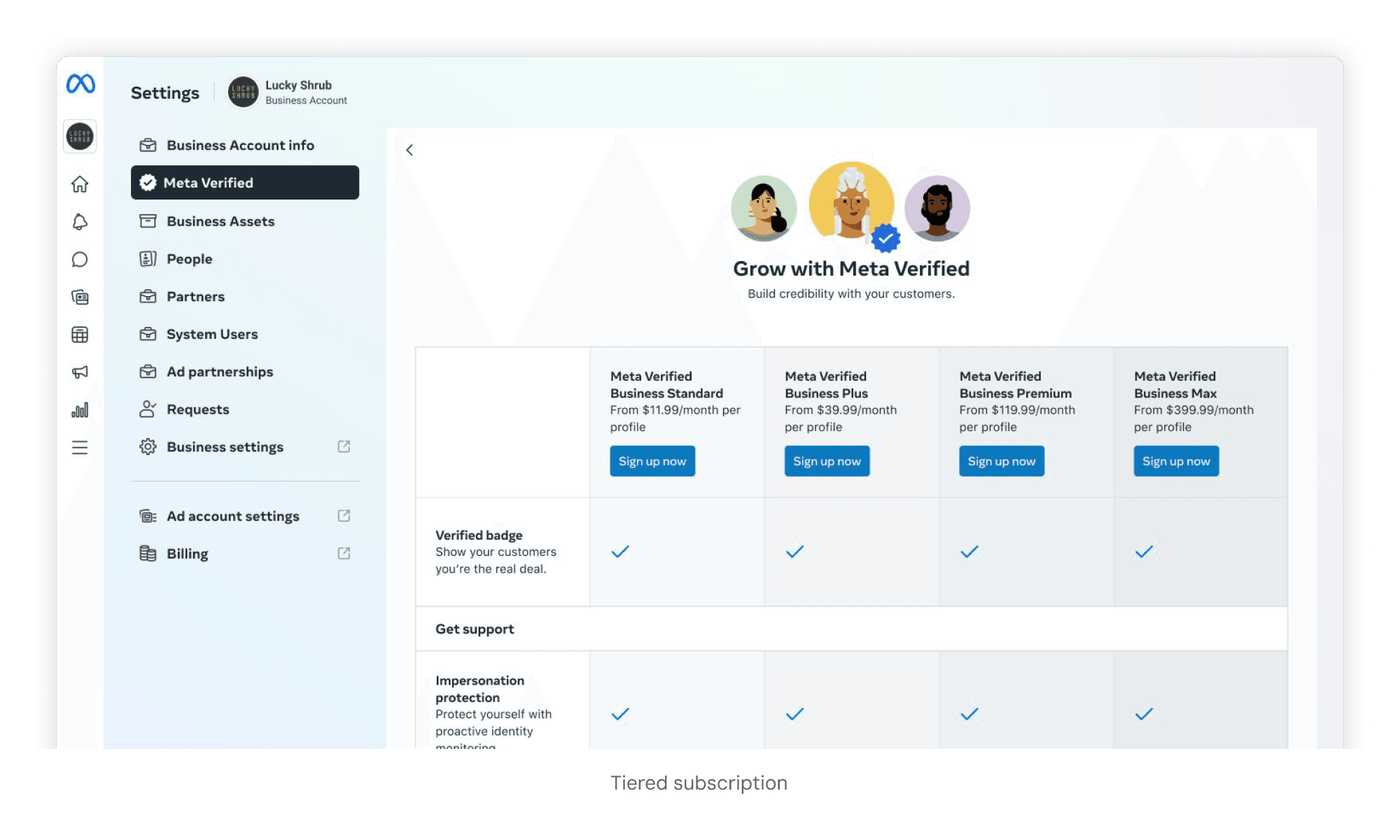
Deep dive #6: Introduce tiered subscription, tailored plans for every business.
Businesses have different needs and budgets. During the consideration stage, pricing and perceived value are key factors in their decision-making process. We introduced a tiered model — Business Standard ($11.99/mo), Business Plus ($39.99/mo), Business Premium ($119.99/mo), and Business Max ($399.99/mo) — that lowers the entry price for broader adoption, while offering premium upgrades for businesses ready to invest in advanced features.
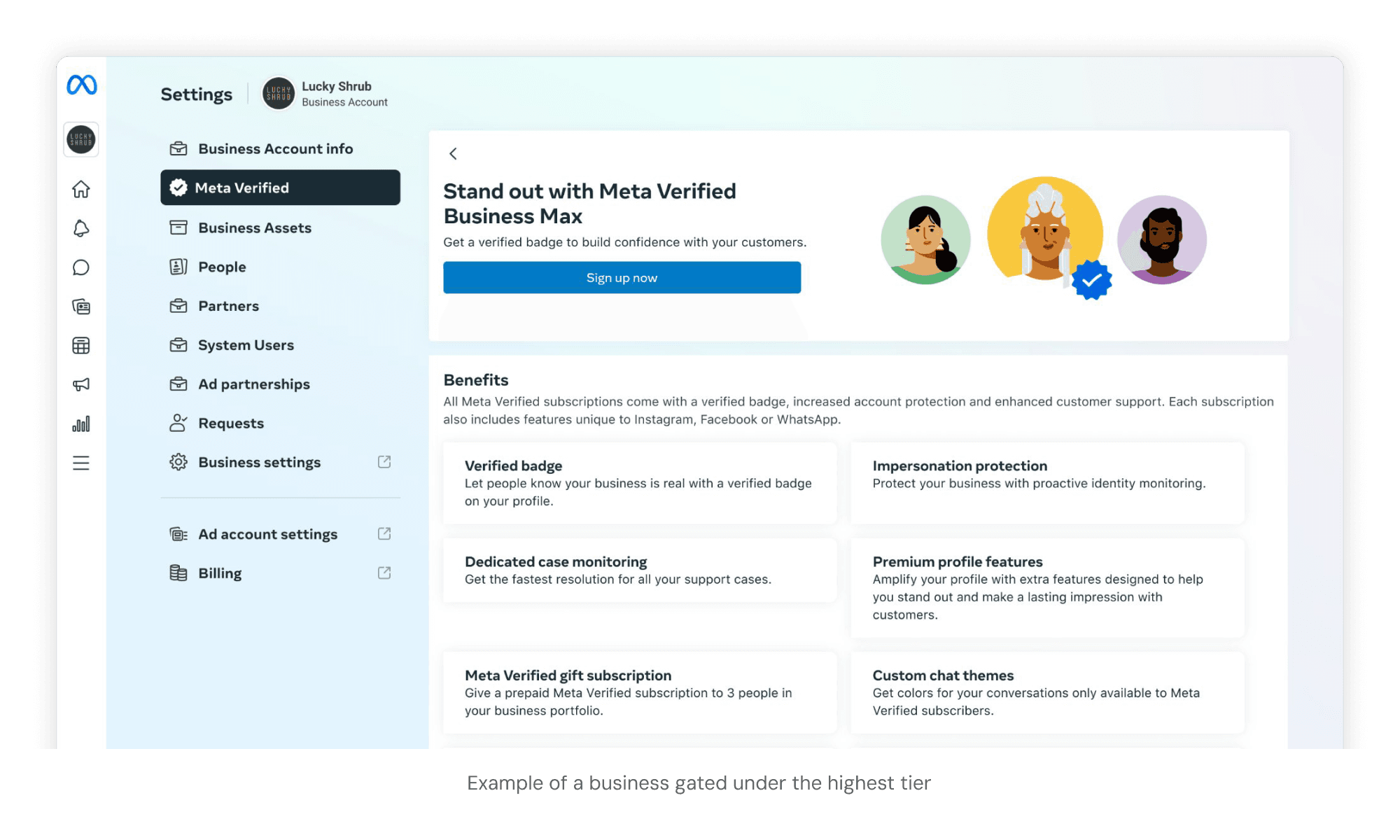
We also implemented a gating system that prevents high-spending businesses from purchasing lower tiers, ensuring each business is placed in the appropriate tier based on their needs and spending potential.
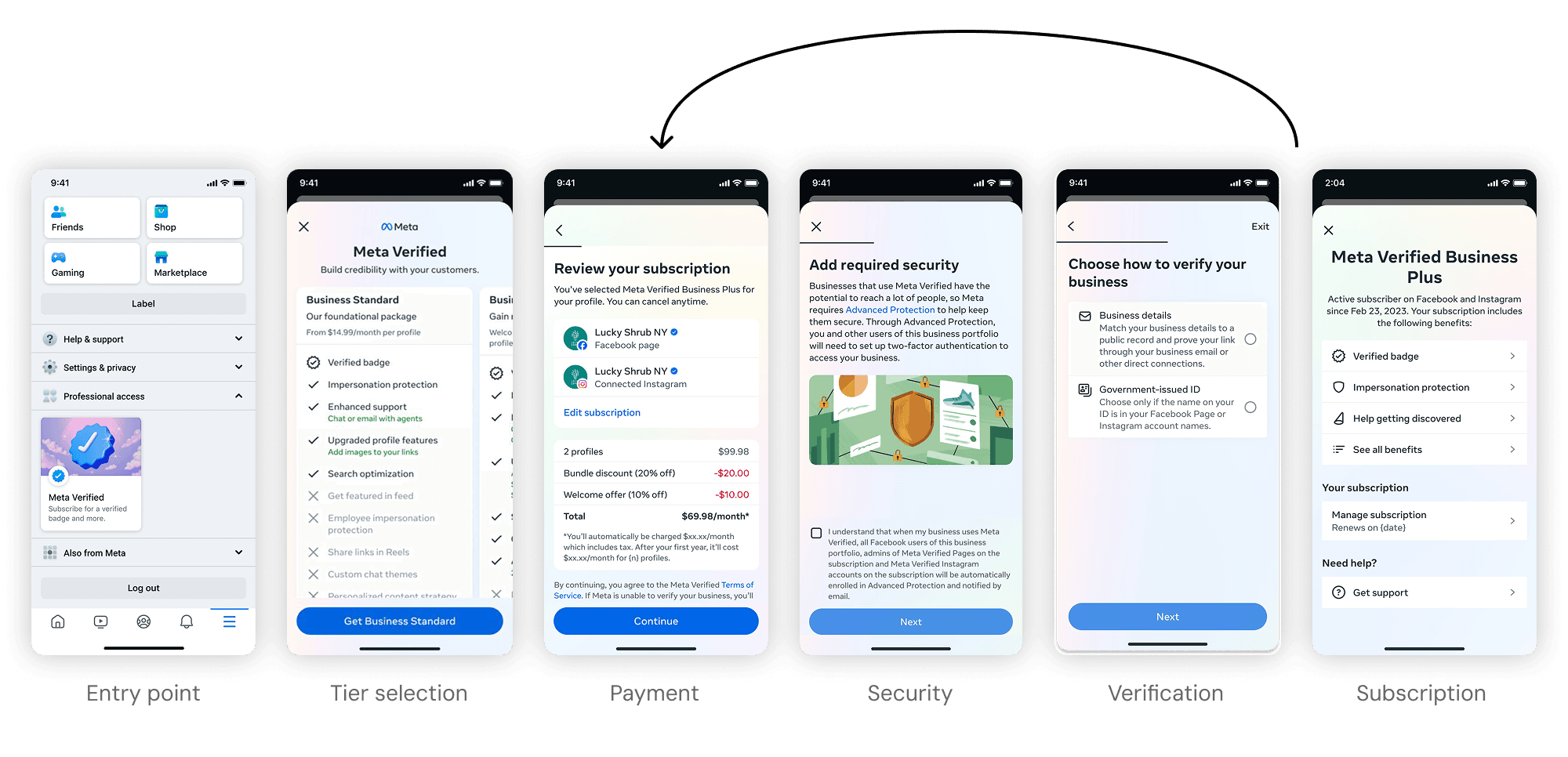
Deep dive #7: Move payment step earlier, before verification.

To streamline onboarding and reduce friction, we moved the payment step earlier in the flow — before verification. This adjustment helped:
- Reduce drop-offs by addressing payment concerns upfront.
- Ensure businesses are financially committed before entering the verification process.
- Minimize friction during the later stages of onboarding, leading to smoother verification.
Deep dive #8: Enhance usability to boost overall product experience.
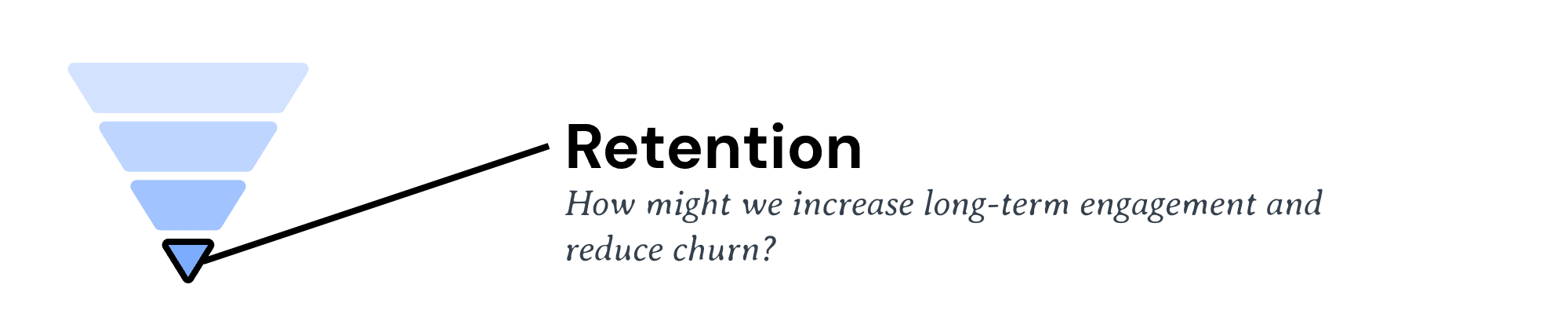
To reduce churn and improve retention, we addressed key usability pain points that were causing frustration among subscribers:
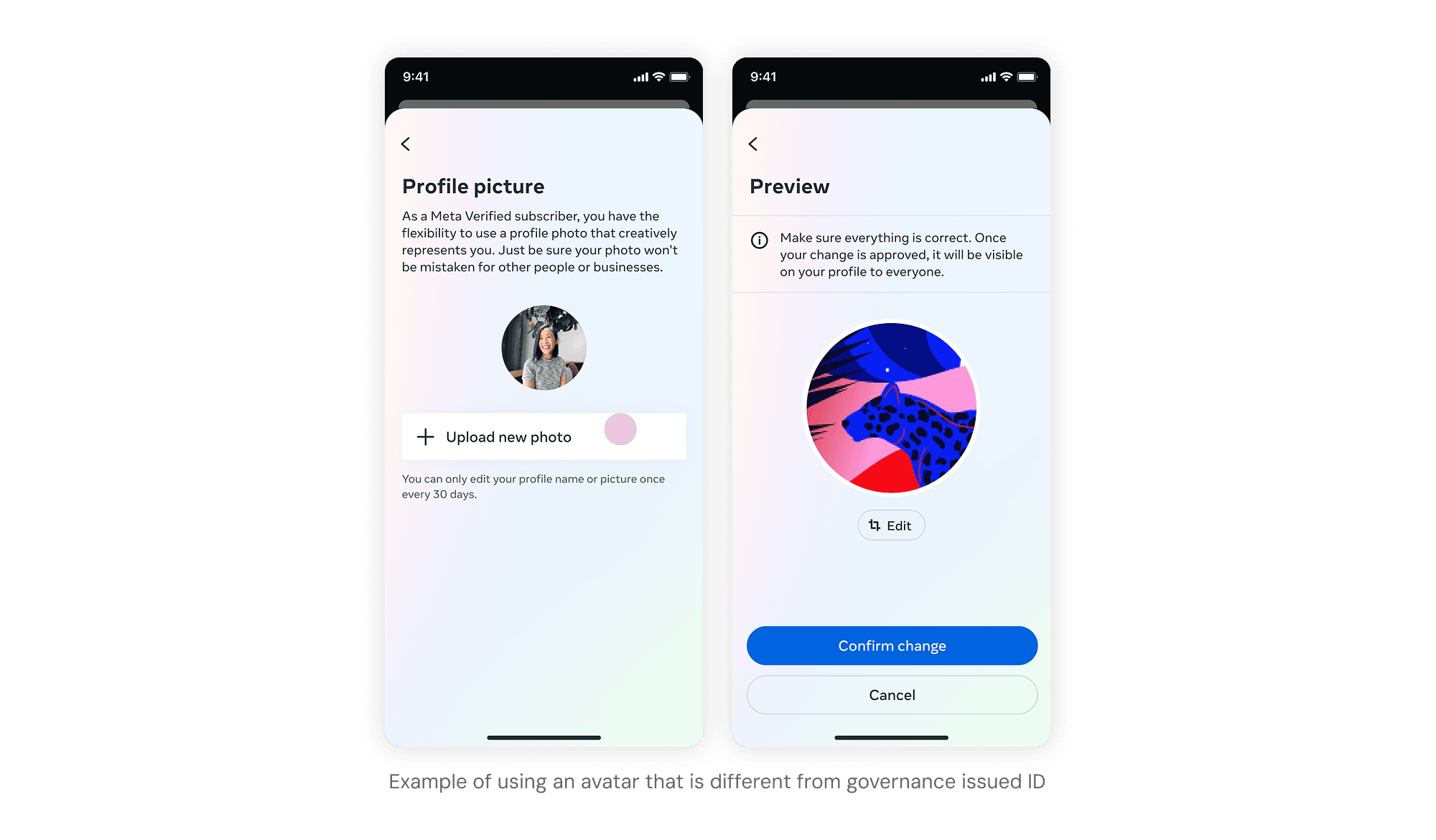
- Fixed profile editing errors: Enabled flexibility for users to choose usernames and avatars different from those shown on their government-issued ID.
- Resolved payment issues: Implemented proactive notifications to warn users of potential payment problems before their subscription is suspended.
04
Result
Result
Phase #1: MVP launched, but fell short of expectations.
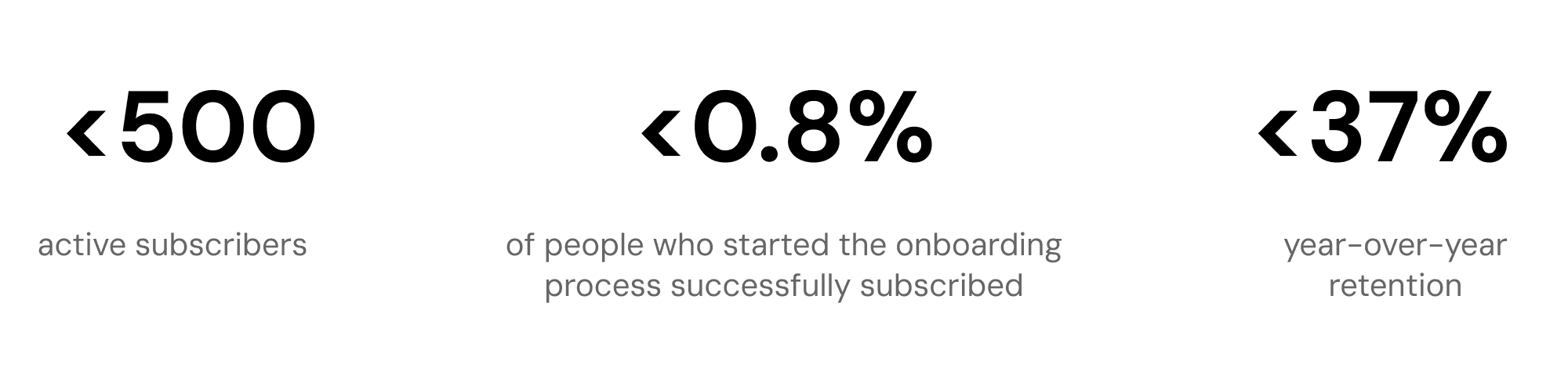
We built Meta Verified for Business (MV4B) in just 3 months. However, the initial launch results fell short of expectations. As planned, we immediately moved into Phase #2. Below are the data from the initial launch, with a 10% holdout in AU and NZ.
Phase #2: Grew active subscribers to 1M.
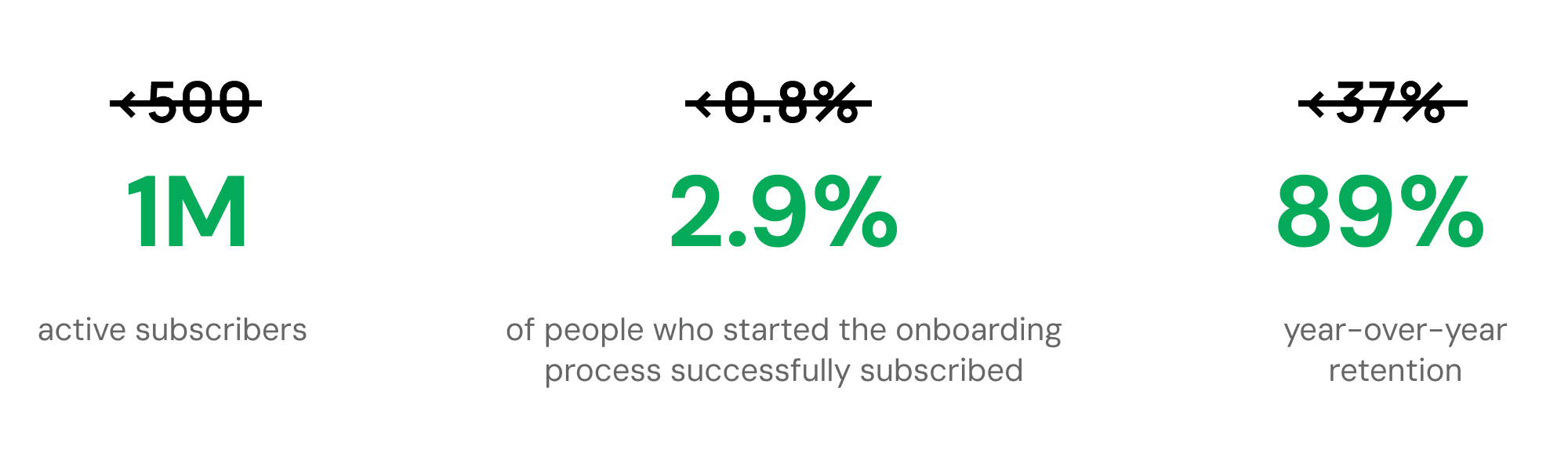
Over the next 12 months, we executed numerous design sprints, conducted leadership reviews, and launched hundreds of updates, iterating on every screen and workflow. These efforts resulted in impressive growth, increasing subscribers from 500 to 1M. Throughout this process, we achieved sustained improvements in retention and overall user satisfaction, driven by strategic design optimizations that directly enhanced the product experience.
Result #3: Sustained retention improvement.
Year-over-year retention grew from under 37% to 89%, reflecting both product quality improvements and the value businesses found in the subscription. Conversion from onboarding starts improved from less than 0.8% to 2.9% — nearly a 4x increase.
05
Next
Next
#1 Continue scaling beyond 1M subscribers.
The growth phase demonstrated a clear playbook for driving subscriber growth. The next opportunity is to apply the same funnel-based methodology to new markets and segments, building on the design infrastructure already in place.
#2 Deepen the value proposition for business users.
While Phase #2 focused on driving adoption, the next phase should focus on deepening engagement — identifying which benefits drive the most perceived value for businesses and doubling down on those experiences.
#3 Expand feature differentiation across tiers.
With the tiered model established, there is now a foundation to introduce meaningful feature differentiation between tiers, giving businesses stronger reasons to upgrade and reducing downgrade rates.